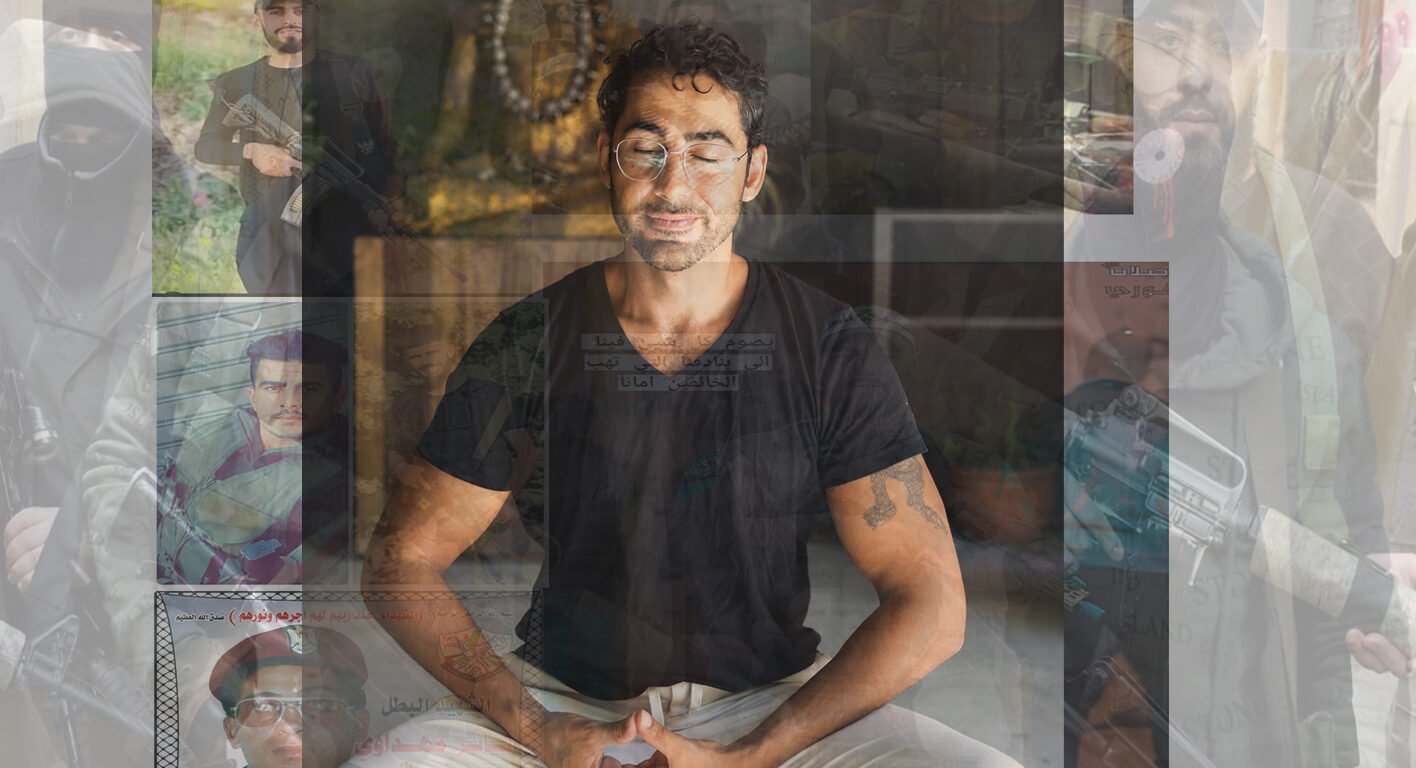
Mohsen Mahdawi is a 35-year-old Palestinian man. At Columbia University he cofounded Columbia University Apartheid Divest (CUAD) with fellow activist Mahmoud Khalil. Both men were detained by ICE in 2025, have robust legal teams, media connections, and despite deportation orders remain in the United States while exhausting the appeals process.
In April 2025 we published two exclusive investigations into Mahdawi that detailed his history of support for terrorist organisations, his glorification of convicted terrorists, and the extensive ties between his family and militant groups. We also exposed significant fabrications with elements of the personal backstory that helped build his reputation in the U.S. Since then, none of our findings from those investigations have been rebutted.
It was therefore troubling to see Senators Peter Welch (D-Vt.), Chris Van Hollen (D-Md.), and Dick Durbin (D-Ill.) still gathering with Mohsen Mahdawi, as they did at the United States Capitol in June 2026 to introduce legislation to repeal a provision of the Immigration and Nationality Act.
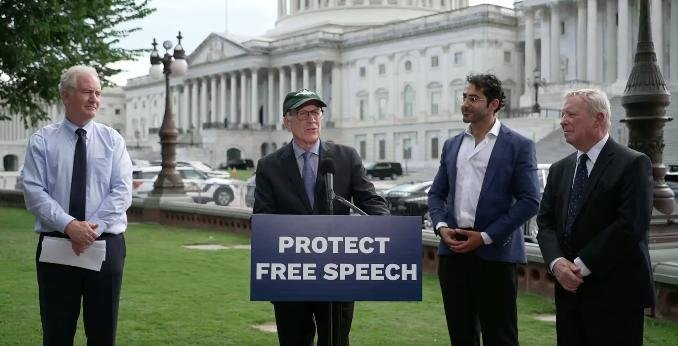
This is not about where you do or do not stand on politics, on Donald Trump, on Israel, or on the subject of ICE. Mohsen Mahdawi should not be your poster child.
CHAPTER ONE – الفصل الأول
Yasser Arafat famously said one thing in English, and something entirely different when speaking to an Arabic audience. Mohsen Mahdawi appears to be doing the same thing.
In an exclusive capture, we obtained a video posted by Mahdawi on 15 December 2024. In the footage, Mahdawi speaks in Arabic on the same day that President Joe Biden’s administration was backing Palestinian Authority (PA) efforts to confront terrorist groups in Jenin, a town under PA control.
Mahdawi was speaking in Arabic to a Palestinian audience in this video.
He may have thought nobody in the West was listening, but he was wrong. We were.
The full footage runs just over ten minutes. It is uploaded to YouTube in its entirety for transparency, and the complete transcript has been published separately.
The clip below shows Mahdawi presenting himself as an active participant in a broad Palestinian resistance movement that encompasses both armed and non-armed forms of struggle. He explicitly identifies himself as a founder of a student protest movement, describing it as part of the same wider resistance effort as the armed resistance in Gaza and the West Bank. Throughout the speech, he repeatedly defends and legitimises “the resistance” and condemns PA actions against armed groups.
By invoking figures from across the Palestinian political spectrum – including Yasser Arafat (Fatah), Abu Ali Mustafa (PFLP), Ahmed Yassin (Hamas), and Fathi Shiqaqi (Palestinian Islamic Jihad) – Mahdawi presents resistance as a unifying national project that transcends factional divisions. In his framing, his own activism abroad is not separate from the struggle inside ‘Palestine’, but forms part of the same resistance movement pursuing a common goal.
Those are not the words of a man distancing himself from organisations that have employed terrorism. Rather, they are the words of someone placing his own activism within a broader resistance framework that includes groups responsible for decades of violence against civilians.
It is impossible to reconcile these remarks with the image of Mahdawi that has been promoted by his supporters in the United States. They were delivered in Arabic to a Palestinian audience, out of sight of those who have embraced him as a man of peace.
But there is more.
CHAPTER TWO – الفصل الثاني
In the footage, Mohsen Mahdawi mentions two cousins who were killed by the Israeli army: Maysara Masharqa and Walid Abu al-Kamal. In an Instagram post published on October 3 2024 they were two of the seven relatives whom Mahdawi claimed were killed by “Israeli Zionist violence”. In that post he described them as victims whose lives had been stolen. In an earlier post on December 19 2023, he suggested that two of them had been assassinated, claiming that an Israeli sniper “unjustly” shot them in the head.
These are the images Mahdawi wanted his English-speaking followers to see:
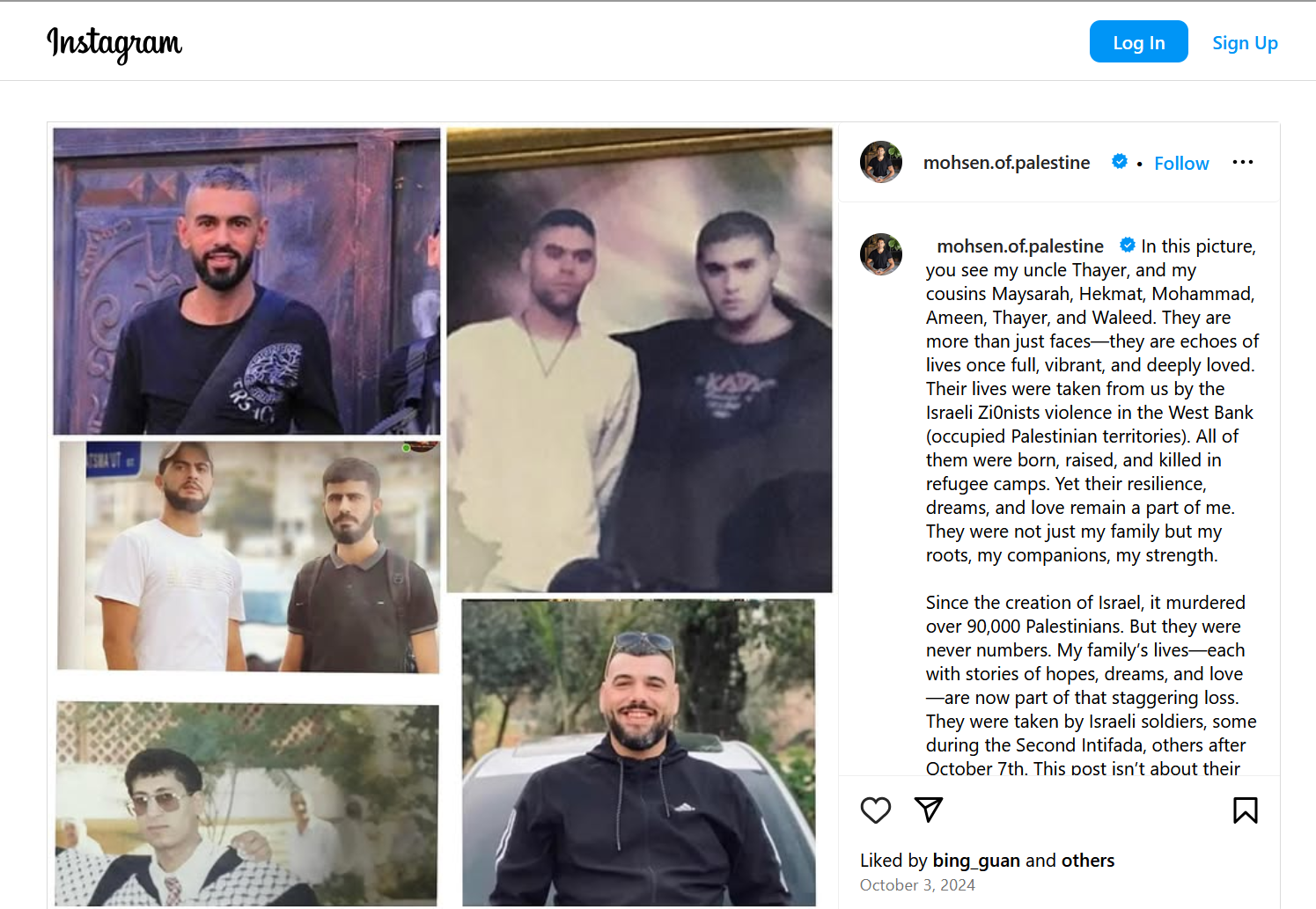
The seven he named were his uncle Thayer, and his cousins Maysarah, Hekmat, Mohammad, Ameen, Thayer, and Waleed.
We managed to identify all seven.
This is what Mahdawi did not want to show his audience:
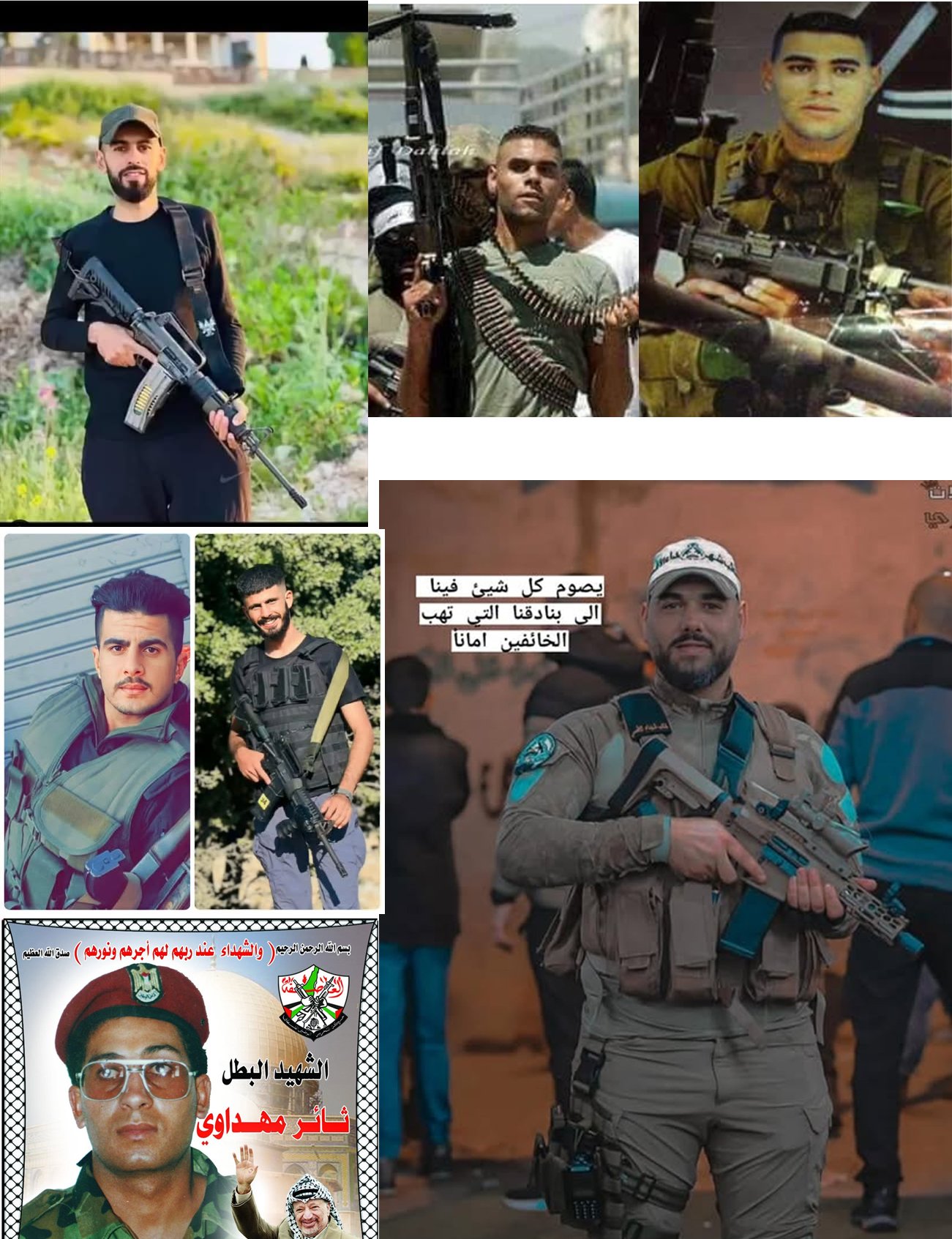
In the same order as they appear in Mahdawi’s post:
- Maysarah Suliman Abd a-Rahman Masharqah. Senior al-Aqsa Martyrs’ Brigade operative. Killed August 30 2024.
- Hekmat Samir Muhammad Milhem. Killed December 18 2023 during exchange of fire with Israeli soldiers.
- Mohammad Samir Muhammad Milhem. Killed December 18 2023 during exchange of fire with Israeli soldiers.
- Waleed Abu al-Kamal. Senior al-Aqsa Martyrs’ Brigade operative. Killed August 6 2024.
- Thayer Muhsein Madawi. Palestinian security force (killed in fighting). September 12 2001.
- Ameen Abu al-Kamal. Killed sometime in 2003 during Second Intifada.
- Thayer Abu al-Kamal. Killed December 25 2004 during Second Intifada
The contrast is striking. Mahdawi presented these men to a Western audience simply as relatives killed by Israeli violence. He omitted that each of the seven was directly involved in armed activity, terrorist organisations, or armed conflict. The image he created was of innocent family members swept away unfairly by Israel.
The reality is clearly very different.
CHAPTER THREE – الفصل الثالث
There are other details that Mohsen Mahdawi prefers to remain hidden from his English-speaking audience.
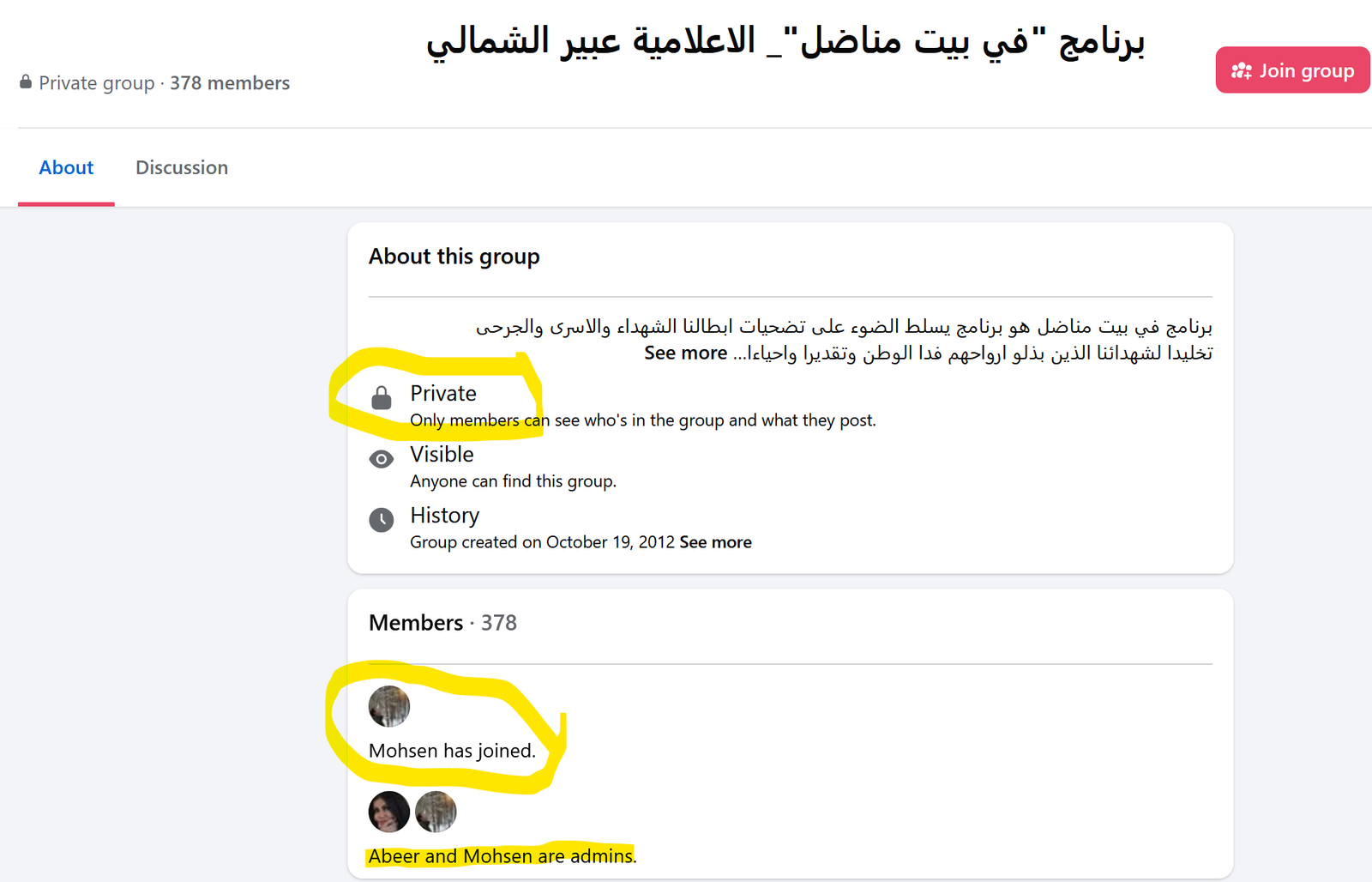
Last year we uncovered a Facebook group honouring Palestinian terrorists that Mahdawi had established and helped administer alongside his mother. The group was linked to a television programme she hosts called In the Home of a Fighter, in which she visits the homes of Palestinian prisoners and “martyrs”.
As the title suggests, the programme is steeped in the glorification of armed struggle. Our investigation documented multiple examples of Mahdawi posting and promoting videos honouring convicted terrorists and celebrating those involved in violent attacks.
Shortly after our investigation was published, Mahdawi left the group and deleted some of his posts. Recently he rejoined as an administrator, and the group changed to “private,” placing both its activity and his involvement beyond public scrutiny.
CHAPTER FOUR – الفصل الرابع
Taken together, all these examples reveal a consistent pattern. When speaking in Arabic to Palestinian audiences, Mohsen Mahdawi openly identifies himself with a broader resistance movement, praises figures from organisations responsible for terrorism, and celebrates relatives he portrays as martyrs.
Yet when presented to American politicians, journalists, and activists, he is marketed as a peace campaigner and civil rights advocate.
One face for his Palestinian audience. Another for Americans.
Despite all of this information being publicly available, much of the media continues to present Mahdawi as little more than an unfair target of the Trump administration. Local and national media outlets continued to recycle the same carefully constructed narrative.
In a piece on June 11 2026, Vermont news outlet VTDigger airbrushes Mahdawi’s own words and background in favor of portraying him as an unfair target of the Trump administration and nothing more. WCAX also makes it appear as if the only problem is that he supports Palestinian campus protests. MyNBC5’s description is so bland, it could appear that Mahdawi was being deported for writing op-eds for local newspapers.
The result is a curious situation. A man whose own Arabic-language statements place him within a wider resistance movement that includes armed factions continues to be presented primarily as an innocent victim of political persecution.
For many Americans, justice means civil liberties, due process, equal treatment before the law and freedom of expression. Those are principles that deserve protection.
Yet the “justice” celebrated in much of the resistance culture Mahdawi associates himself with is something entirely different. It is often tied to the language of armed struggle, martyrdom, liberation through force, and the celebration of those who have used violence in pursuit of political objectives.
Bin Laden’s ”justice”, expressed in his famous statement following 9/11: “as you kill so you shall be killed” justified the horrors of 9/11.
Free speech is an issue all Americans can support, but Mahdawi is not the proper poster child for this matter.
You do not have to take our word for it. Just listen to what Mohsen says in Arabic.
(these investigations into Mohsen Mahdawi were co/written with and cross-posted by Vermont based Rachel Feldman)
Help Me Fight Back Against Antisemitism and Misinformation
For over a decade – and for many years before that behind the scenes – I’ve been researching, documenting, and exposing antisemitism, historical revisionism, and the distortion of truth. My work is hard-hitting, fact-based, and unapologetically independent.
I don’t answer to any organisation or political backer. This website – and everything I produce – is 100% community funded. That independence is what allows me to keep speaking out, without compromise.
If you value this work and want to help me keep going, please consider making a donation. Your support makes it possible.
You can donate via PayPal using the button below:
Or by using my Paypal.me account.
If you wish to provide regular monthly support you can also do this via my Patreon page
Every contribution is truly appreciated – thank you for standing with me.