
On 27 April 2026, 14-year-old Rida left her home in Lahore, Pakistan to buy food for her younger siblings while her parents were at work. Rida was abducted by a Muslim man named Muhammad Saqib. Three days later, he presented the child before a court, claiming she had converted and willingly married Saqib.
Just a few weeks ago, on 12 June 2026, another 13-year-old Christian girl from Faisalabad, in Punjab province, was abducted by a Muslim man while she was at a local market.
Over 1,000 young girls are abducted each year in Pakistan by Muslim men. Many of these girls are Christian. Even when families try to trace them, provincial governments often fail to take action, and parents frequently report that police fail to act.
To see how this news was reported in the West, I searched back several months through the main Pakistan-related pages on the BBC News website.
I did not find a single story covering these recent child abductions.
Over 1,000 young girls a year. Stolen without a voice.
Slaughter in Nigeria
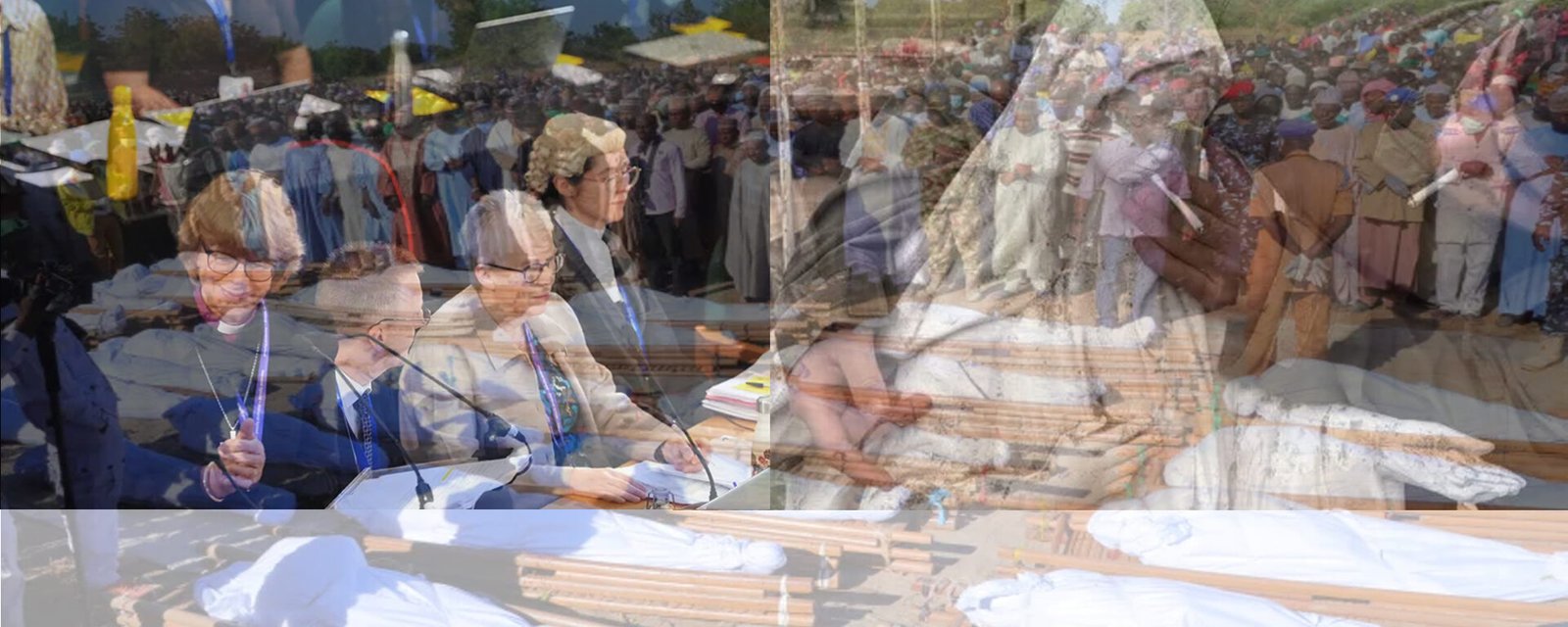
Two weeks ago Islamist gunmen murdered twenty-two Christians in Kaduna state. The week before that outrage, another twenty Christians had been killed in a similar attack:
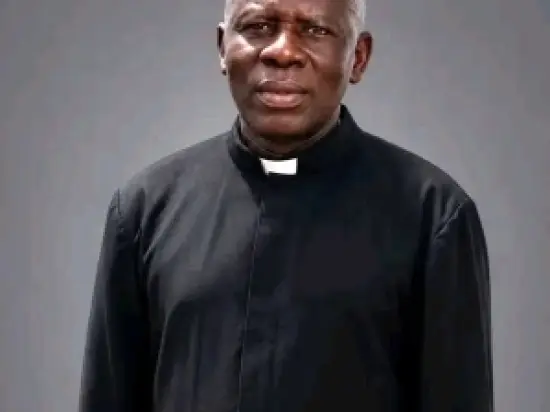
The attacks form part of persistent violence targeting Christian communities in large parts of Nigeria. Sharia law has been implemented in several states, turning Christians into second class citizens, and Christian women “face horrific abuse” if captured.
The violence has been occurring for years, and according to estimates has claimed tens of thousands of Christian lives. Some of the detail is brutal. In one report, while under attack, a Christian community chose to sleep together in the stores in a market for safety – but the extremists simply burnt down the stores with the people inside.
Yet the BBC’s Nigeria news section carries no mention of these recent attacks.
The accusation of silence in the face of outrage can also be laid at the door of the Archbishop of Canterbury.
There may be as many as 22 million Anglican Christians living and worshipping in Nigeria. Yet while the current Archbishop of Canterbury has used her social media platforms to speak out on issues such as refugees and the environment, she does not appear to have mentioned the persecution of Christians in Nigeria at all.
The difference in focus is stark. At the end of June, as dozens of Anglican Christians were being murdered in Nigeria – the leading cleric of the Anglican Church only found time to criticise Israel – a nation with a 180,000-strong Christian community that practises its faith in relative freedom.
Pakistan and Nigeria are not isolated cases.
Mass Graves and Anonymous Victims
Ethiopia: At the end of May, at least thirty-seven Orthodox Christians were killed in attacks in Ethiopia’s Oromia region. Hundreds more were displaced from their homes, and the 101-year-old Telata St. Gabriel Orthodox Church was burned to the ground.
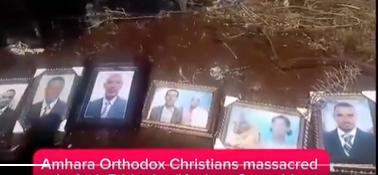
These massacres are only the latest episode in a continuing wave of anti-Christian violence. The situation has become so serious that the European Centre for Law and Justice (ECLJ) has submitted an urgent appeal to the United Nations Office on Genocide Prevention.
There is no mention of all this on the BBC’s dedicated English-language Ethiopia news page.
It is not as if the BBC editorial staff can claim ignorance.
The BBC’s Amharic-language service carries extensive reporting on these May attacks – but for some reason these stories never reach the pages intended for a UK-based audience.
This makes the problem far more serious. It means that the BBC is choosing not to amplify the voices of persecuted Christians, even when they have all the information at hand to do so.
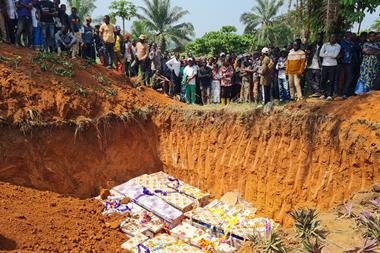
Democratic Republic of Congo: Also in late May, Islamist terrorists claimed responsibility for killing 76 Christians in North Kivu (DRC). It is estimated that around 1,130 Christians have been killed in this region in just 18 months. In one incident, Islamic terrorists rounded up approximately seventy Christians inside a Protestant church in the town of Kasanga, and decapitated them. Christians in the area have been told to “convert, pay (Islamic protection money, the jizya tax), or die”.
Pakistan, Nigeria, Ethiopia, Congo.
Four countries with countless Christian victims.
Yet none became a major story on the BBC’s pages. None were the focus of the Archbishops’ concern.
And the list does not end there. Every example below comes from the last few months alone:
| Recent attacks on Christian communities | ||
|---|---|---|
| Iran | June 2026 | Christian women imprisoned in Iran |
| Yemen | April 2026 | Christian faith leaders arrested and "disappearing" |
| Egypt | April 2026 | Christian imprisoned for posting faith-based videos online |
| Pakistan | June 2026 | Christian murdered for drinking water from a water cooler reserved for Muslims |
| India | June 2026 | Church congregation attacked by 100-strong mob. |
| Sudan | June 2026 | Priest murdered |
| Mozambique | June 2026 | Bishop murdered |
| Myanmar | June 2026 | Christian civilians captured and killed by Myanmar military |
| Bangladesh | May 2026 | Christians beaten by Islamist gangs |
| Somalia | June 2026 | Christian woman beaten and hospitalised |
As horrific as the list may be, it is not exhaustive. In some countries the situation is so bad that news of specific acts of violence never make it out. Eritrea, for example, has been described as one of the most dangerous places in the world for Christians.
Nations like Syria and Iraq, which have both seen their Christian communities decimated in the last decade or two, are not listed either. They could easily have been added. This footage from March 2026 shows a large mob attacking the Syrian Christian town of Suqaylabiyah, smashing up shops and attacking civilians. Gunshots can be heard in the video. It took hours for Syrian security forces to turn up:
All this raises a serious question. As Christians in the Middle East, Africa and Asia were being massacred, their families destroyed, their towns raided and their children stolen – what were their brothers and sisters in the UK doing to stand in solidarity with them?
The answer is very little.
It is not entirely their fault. It can be argued that nobody is informing them. On the Christianity pages of the BBC website, only two international stories from the last few months appear – both about Israel. For example, on 7 May 2026, the BBC ran a front-page story about an Israeli soldier in South Lebanon mocking a statue of the Virgin Mary. A few weeks earlier, it had done the same with another story about an Israeli soldier smashing a statue of Jesus.
But this raises even more serious questions: why does the BBC place the story of an Israeli soldier putting a cigarette in the mouth of a statue of the Virgin Mary on its front pages, run several related articles looking at the incident from various angles, and yet fail to tell its audiences about the massacre of Christians in Nigeria, or about the thousands of Christian girls abducted in Pakistan?
Which story is more important for Christians to learn about today?
The BBC is not alone. Most mainstream news outlets in the UK and US ran the stories about Israel – almost none carry updates on the global persecution of Christians.
The Orchestrated Blindness of British Christians
Which brings us back to the Church. If western media is not vocalising the perseuction of Christians and bringing it to the attention of the British public, then surely the Church is speaking out for them.
Except it is not.
Christian Aid (CA), has not mentioned either Pakistan or Nigeria on its X account for over three years – but during that time there have been 100s of posts on the Palestinians. CA’s Facebook page is no better. As Christians are being slaughtered in over a dozen countries, the only recent political post I could find was promoting the “Time to Act” campaign – calling for sanctions against Israel.
Take a look at the website for the Archbishop of York. The site has nothing to say about any of the recent atrocities committed against Christian communities. Yet it also promotes the same “Time to Act” campaign calling for sanctions against Israel.
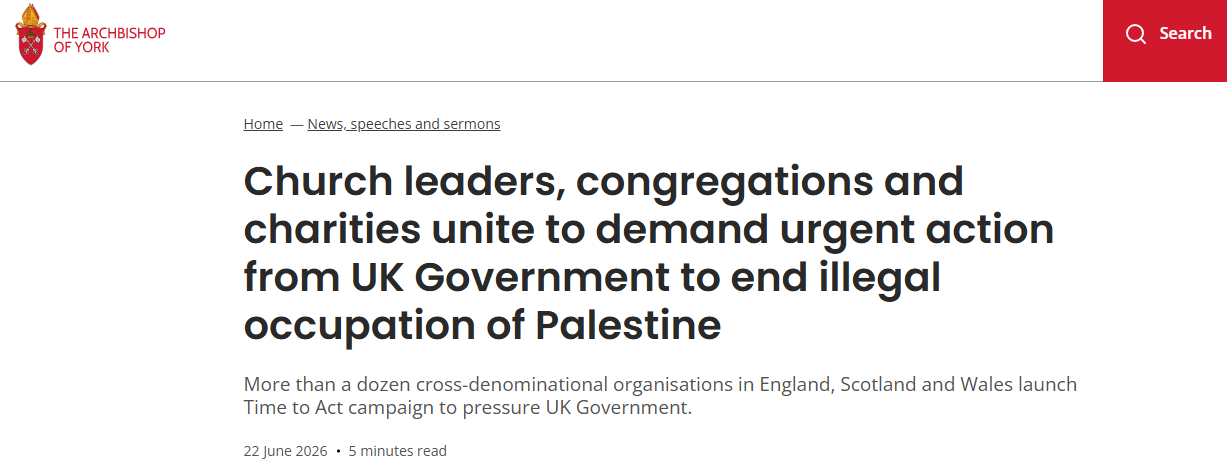
And as I write this it is getting even worse.
The Antisemitic Motion at The Synod
The General Synod is the Church of England’s national governing body. It is the closest thing the Church has to a parliament. And it is currently gathering for five days of debate and decision-making.
The agenda of the meeting is made public and there is only one current international issue being discussed – “Kairos Palestine.” The motion is even listed first on the Church of England website:
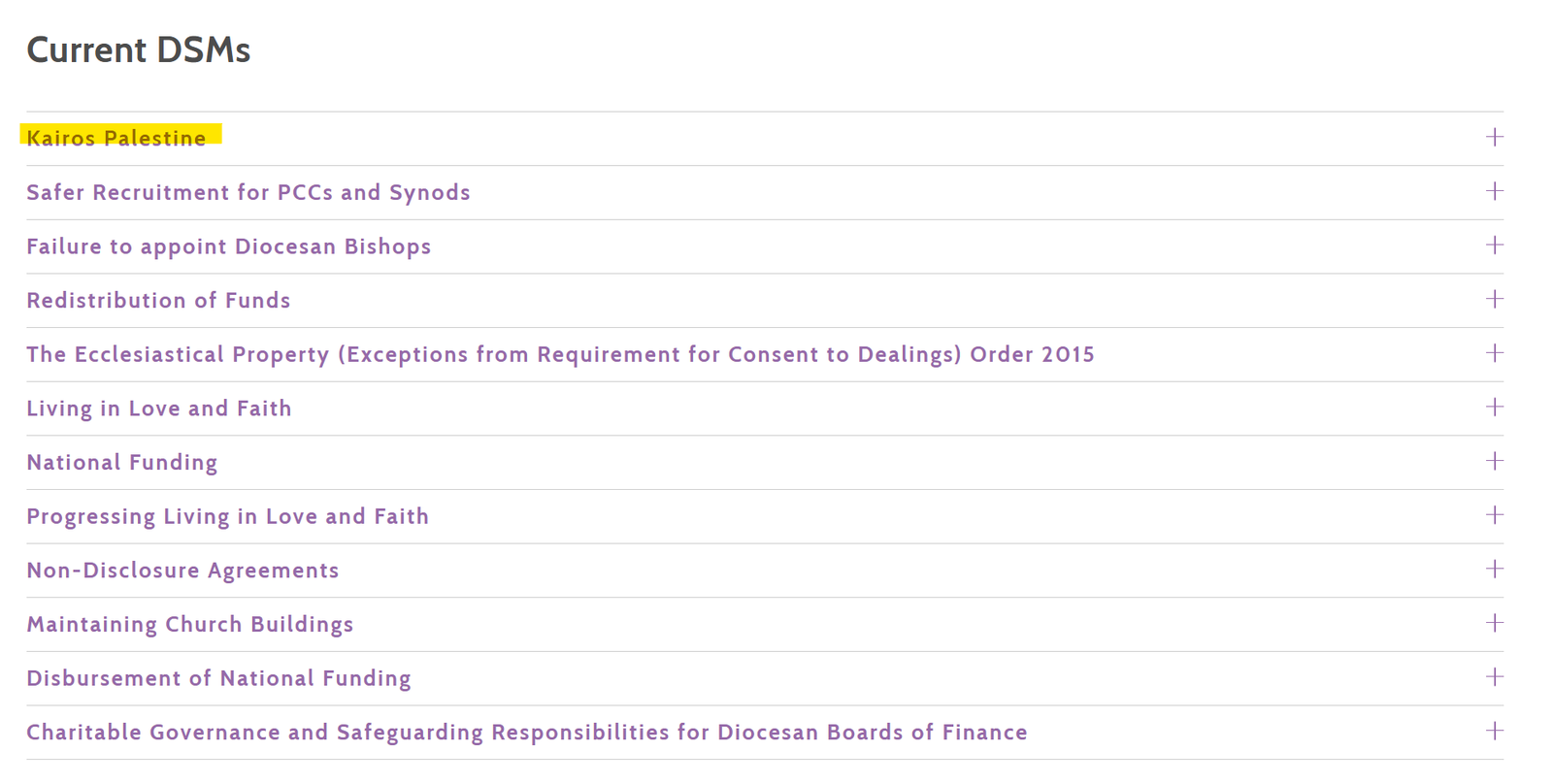
The motion is not simply about supporting Palestinian Christians. It explicitly asks Synod to engage with *Kairos Palestine II*, a document that accuses Israel of genocide, apartheid, colonialism, ethnic cleansing, Jewish supremacy and racism. Kairos II portrays Jewish self-determination as a corrupt and oppressive ideology. It calls on churches to isolate Israel through boycotts and sanctions and urges them to distance themselves from “Zionist” voices. The Diocese of Carlisle sponsored the motion.
Describing the very existence of Israel as a racist endeavour and denying the Jewish people the right to self-determination are clear breaches of the IHRA definition of antisemitism. Yet *Kairos Palestine II* does not merely stray into this territory, it anticipates the objection. The document dismisses concerns about antisemitism as a “misuse” of the term designed to protect “Zionist interests”.
This creates an extraordinary moral loophole. Israel can be accused of virtually every evil imaginable, Zionism can be condemned as a racist moral corruption, and any suggestion that such rhetoric may be antisemitic is ruled out in advance. The accusation is made untouchable because the defence itself is declared illegitimate. In effect, the document grants itself permission to make the most outrageous allegations possible while pre-emptively discrediting anyone who questions them.
Remarkably, this motion comes from a Church that formally adopted the IHRA definition of antisemitism “without qualification or exemption“, yet is now inviting Synod to engage with a document that falls squarely into territory that IHRA was designed to identify and challenge.
Sir Ephraim Mirvis, the Chief Rabbi, stated that the document “harms peace”, is “full of falsehoods” and risks “undermining decades of careful relationship-building.” I would argue he is being generous and reserved in his criticisms.
The Synod Betrayal
This is not simply another attack on Israel. It is an immoral attack on the legitimacy of Jewish self-determination, wrapped in the language of Christian witness and social justice.
Just last week, the Methodist Conference in Telford voted to engage with the antisemitic libels contained in Kairos Palestine II. The Church of England is now being asked to follow the same path.
The direction of travel could hardly be clearer – and there is every reason for both urgency and anger.
During the weeks I spent researching this article, more Christian victims of persecution were added to the list, many of them murdered by Islamist extremists.
Their names will never be known in Britain. Their stories will never be told.
The same Islamist ideology that drives much of the persecution of Christians from Nigeria to Pakistan is also at the heart of the war against Israel. Yet it is Israel, rather than that ideology, that has become the focus of church activism.
Worse still, British Christians are being denied the truth about the persecution of their fellow believers while being encouraged to campaign against Israel, leaving British Jews more vulnerable than they have been for generations, while hundreds of millions of persecuted Christians are abandoned to suffer in silence.
It is difficult to imagine a more cowardly betrayal than this.
Help Me Fight Back Against Antisemitism and Misinformation
For over a decade – and for many years before that behind the scenes – I’ve been researching, documenting, and exposing antisemitism, historical revisionism, and the distortion of truth. My work is hard-hitting, fact-based, and unapologetically independent.
I don’t answer to any organisation or political backer. This website – and everything I produce – is 100% community funded. That independence is what allows me to keep speaking out, without compromise.
If you value this work and want to help me keep going, please consider making a donation. Your support makes it possible.
You can donate via PayPal using the button below:
Or by using my Paypal.me account.
If you wish to provide regular monthly support you can also do this via my Patreon page
Every contribution is truly appreciated – thank you for standing with me.




Thank you, David, for your work. As part of certain giving for Maryam Magdalitha’s day (22 July) I am moved to give a humble amount towards your work.
Thank you for bringing these atrocities to light and exposing the hypocrisy and shortsightedness of the “adults” in the room. Saddened and appalled on behalf of my Christian brothers and sisters.
Obviously, put two more British institutions on the list of irrelevance: the Monarchy and the Church of England. The church is already on the list of heinous fraudency.
Well said, David. I tried for fifteen years through a detailed newsletter which went to over 100 MPs (plus thousands of others) documenting each month the many examples of the global persecution of Christians. I aLao included reports of antisemitism and and attacks on other minority faith communities.
Twelve years ago I spoke at the CofE Synod in York where my presentation was explicitly about the barriers and resistances to hearing about – and speaking up about – this persecution including several real genocides. Since then nothing has changed within the Church and in many ways things have got worse.
My conclusion after many years of battling away at this is that the denominations’ avoidance of this topic is not just due to ignorance of what is happening: it is predominantly political because the churches in the West have identified with the Left and its favoured causes which include justification and excuses for Islamist activities.
The trouble today is that anti-Israelism has become the new religion of the far left, far right, Islamism,academia and most of the establishment Churches.
Because Israeli pushback (hasbara) against the charges of apartheid, genocide, settler colonialism etc has been so diabolically bad, to the point of non-existence, these accusations have become the truth of our enemies.
Until Israel gets its act together, this situation will continue to worsen