
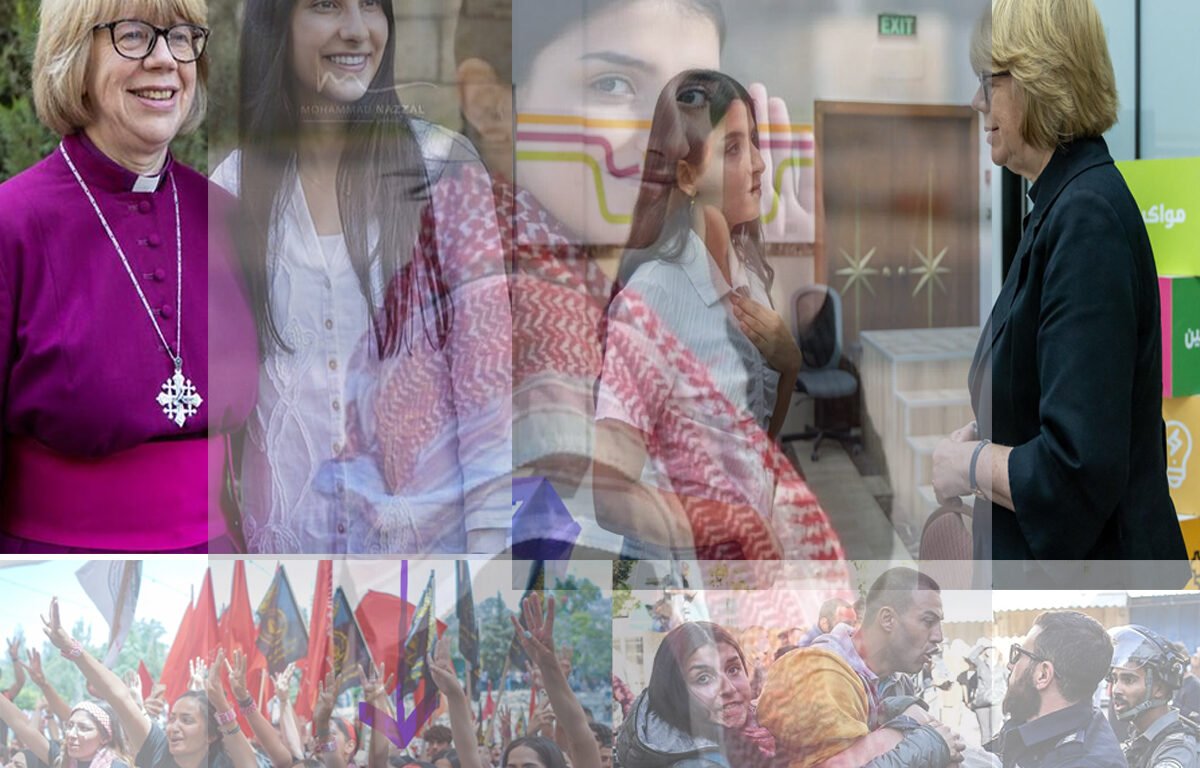
British Christians are being misled, not only by their own government and institutions, but increasingly by some of their own religious leaders. What the Archbishop of Canterbury did this week during her visit to Israel and the Palestinian Authority-controlled areas facilitates those who support violence. It sends a dangerous and deeply misleading message to the very people she is supposed to serve. At a time when Christians are crying out for moral courage and effective leadership, the new Archbishop of Canterbury showed the world she is gullible, spineless and cowardly.
It isn’t just that the Archbishop of Canterbury presented a shallow, propaganda-driven account of the lives of Christians in the birthplace of Christianity, or that she completely obscured the far broader challenges posed by Islamist extremism confronting the Christian communities who actually live there. At a time when hundreds of millions of Christians live under persecution, intimidation, discrimination and violence, Britain’s most senior church leader chose to stand alongside individuals with publicly documented associations with the PFLP, ignore the Islamist persecution of local Christians completely, and resort to that age-old Christian failsafe when the going gets tough – she simply blamed the Jews for it all.
The Archbishop of Canterbury Visits the Holy Land
There is more than one reality to Palestinian Christian life. The question is why so many British Christian leaders continually choose to present only the version of events that reinforces the Palestinian propaganda narrative. This is not a Christian voice – it is one dominated by Islamists and spoken mostly by terrorist factions and PFLP-linked NGOs created as go-betweens for a Western audience.
Christians will not secure their future by standing alongside Hamas and Islamic Jihad-driven narratives, and over the last few decades, some church groups have mistakenly aligned themselves with Islamist-driven anti-Israel movements. This misplaced strategy serves only those who seek division and conflict, does nothing to help either Israelis or Palestinian Christians, and leaves British Christians with a profoundly distorted understanding of the pressures facing one of the world’s oldest Christian communities.
It is also profoundly un-Christian.
The Archbishop embarked on a five-day pilgrimage to the Holy Land. There was much for her to do there. Christians once made up more than 10% of Palestinian society. Today, the Palestinian population is approximately 98.5% Muslim. What was once a thriving Christian community has dwindled to around 42,000 people. Even Bethlehem, once overwhelmingly Christian, is now overwhelmingly Muslim.
There is certainly a story the Archbishop of Canterbury needs to tell. Christian communities have been devastated throughout much of the Middle East. The Archbishop should know this better than anyone. In 2015, her predecessor Justin Welby travelled to Egypt to offer condolences following a terrorist attack that killed twenty-one Egyptian Christians in Libya. Between 2016 and 2018, Justin Welby posted numerous times following anti-Christian terror attacks in Egypt itself:



In 2017 he visited Iraqi Christian refugees in Jordan to hear about the “intense suffering” that has caused them to flee after years of Islamist violence:

No Archbishop in recent times has been able to visit Syria, where war and Islamist extremism continue to devastate Christian life.
Palestinian Christians live in this neighbourhood.
Christians in the Holy Land have been fleeing oppression for centuries – long before modern Zionism became a force here. In the 19th century, “Turkos” from the Southern Syrian Sanjaks of the Ottoman Empire – long before anyone called them Palestinian – made their way to far-off places like Sth America. This is how Chile became a major Arab population centre.
“Thousands of Arabs in the late nineteenth and early twentieth centuries decided to leave their homeland in hope to find a better future. This was motivated by the persecution set forth by the Turkish Ottoman Empire, which recruited young Christians in their ranks to fight on the battlefront. Added to this were the poor living conditions and lack of opportunities for Christians who, according to the prevailing law, were not allowed to serve in public office.”
That is a description of genuine religious oppression. And this is before World War I brought tighter conscription, deportations and severe wartime hardship, which accelerated the exodus, with Christians in the region fully aware of what was happening to their fellow Christians in Armenia and Assyria.
A hundred years of conflict followed, between the rising Jewish state and the Islamic extremists that seek to destroy it. This left the Christians in a difficult position. Those living under Israeli rule enjoyed freedoms unknown elsewhere in the region, while those living under Palestinian rule found themselves caught between an unresolved national conflict and the growing influence of Islamist movements. A minority of Christians chose to align with anti-Israel militant movements mostly through affiliation with the Marxist PFLP – thus placing them in a political alliance with Islamist forces – but for the most part, Christians suffer in silence, unable to stand up and give voice to their oppression, or even name their oppressor, for fear of Islamist retaliation.
Christian organisations that monitor levels of persecution describe Islamic oppression as the primary persecution driver in the Palestinian-controlled Territories. It warns that radical Islamic influence is growing, that converts from Islam face the most severe persecution, and that church leaders who criticise the authorities or Islamic rule can face negative consequences.
“Generally speaking, Christians are affected by Islamic oppression throughout the Palestinian Territories, although there is noticeably more pressure in Gaza than in the West Bank, because of the presence of radical Islamic movements there.”
In February 2025, a young female Christian convert was murdered by her own family. Her pastor received death threats. “Chris”, one of those helping to monitor persecution levels states that Christians in PA areas are seen as infidels, and are being “squeezed out”.
Christians under PA rule are acting exactly as persecuted minorities do – and the Archbishop of Canterbury said nothing about any of it.
Instead the Archbishop arrived in a territory where only around 42,000 Christians remain, a place in which Islamist oppression is their greatest enemy – and she managed to leave presenting Israel as the principal source of their suffering.
The “Friends” of the Archbishop of Canterbury
Out of interest, I followed the posts about the Archbishop’s pilgrimage and, including the announcement of the trip and the final statement published as she left, there were eight updates on her website across the five days.
On the second day, in the Christian town of Birzeit, she described meeting Layan Nasir, who is described as “a 26-year-old Anglican woman who has spent three periods in Israeli administrative detention and prison over the last five years.”
No context is provided at all, and the Archbishop’s office presents her as a victim of injustice.
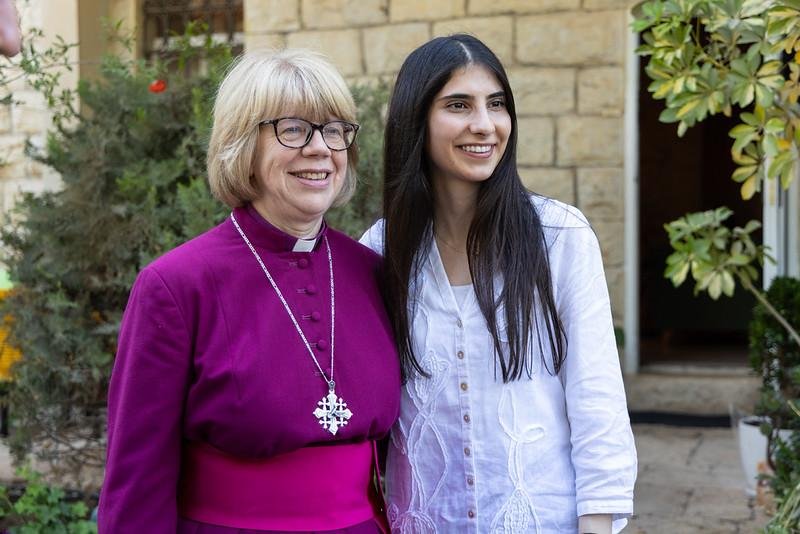
Yet it omits important context. How can the Archbishop know that she was the victim of an injustice? How can she publicly endorse that conclusion while omitting the very information needed to understand why Israeli authorities took an interest in her in the first place?
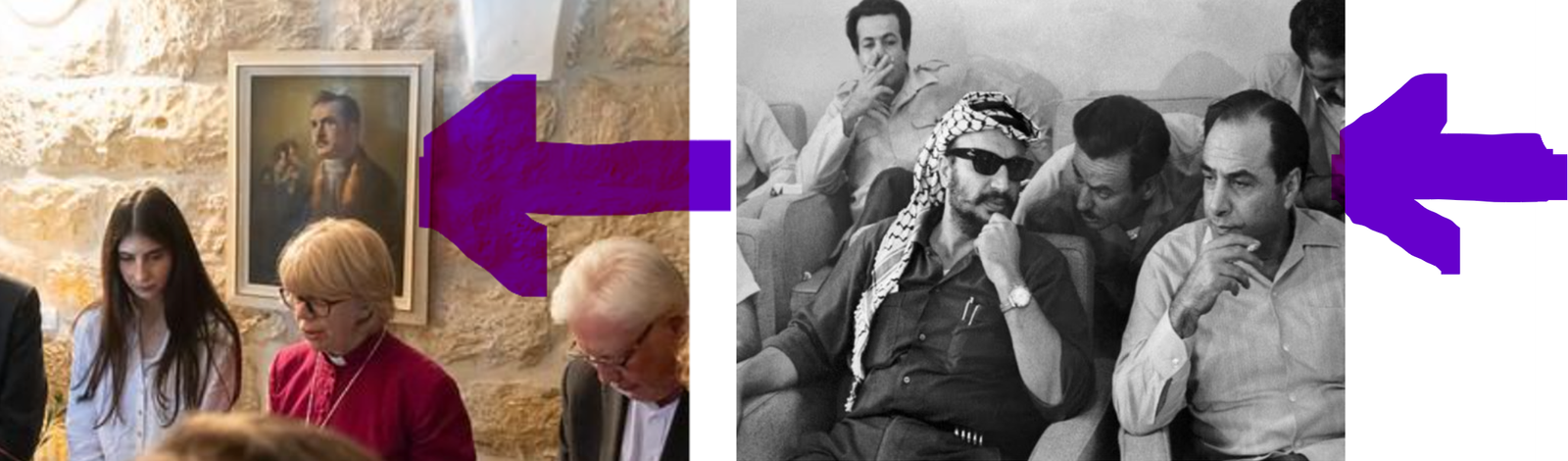
Because it turns out that Nasir is not some random student. In a society where clan matters, she comes from a family with a powerful history. In the images posted from Nasir’s home by the Archbishop, we can see family photos on the wall, including one of Kamel Nasser, a former spokesman for the Executive Committee of the PLO.
Layan Nasir has pedigree. She was an activist for the Progressive Democratic Student Pole at Birzeit University, a student movement associated with the PFLP. The PFLP is designated as a terrorist organisation by the United States, the European Union and Israel. Her timeline is full of support for the “Front” – and it is why she can be seen alongside red PFLP flags, or draped in the red tell-tale Keffiyeh.
In this post, she is using the usual Marxist terminology of “comrade”, and ends with “long live our Pole (student bloc), and long live our Front,” referencing both the Progressive Democratic Student Pole and the Popular Front for the Liberation of Palestine, PFLP.
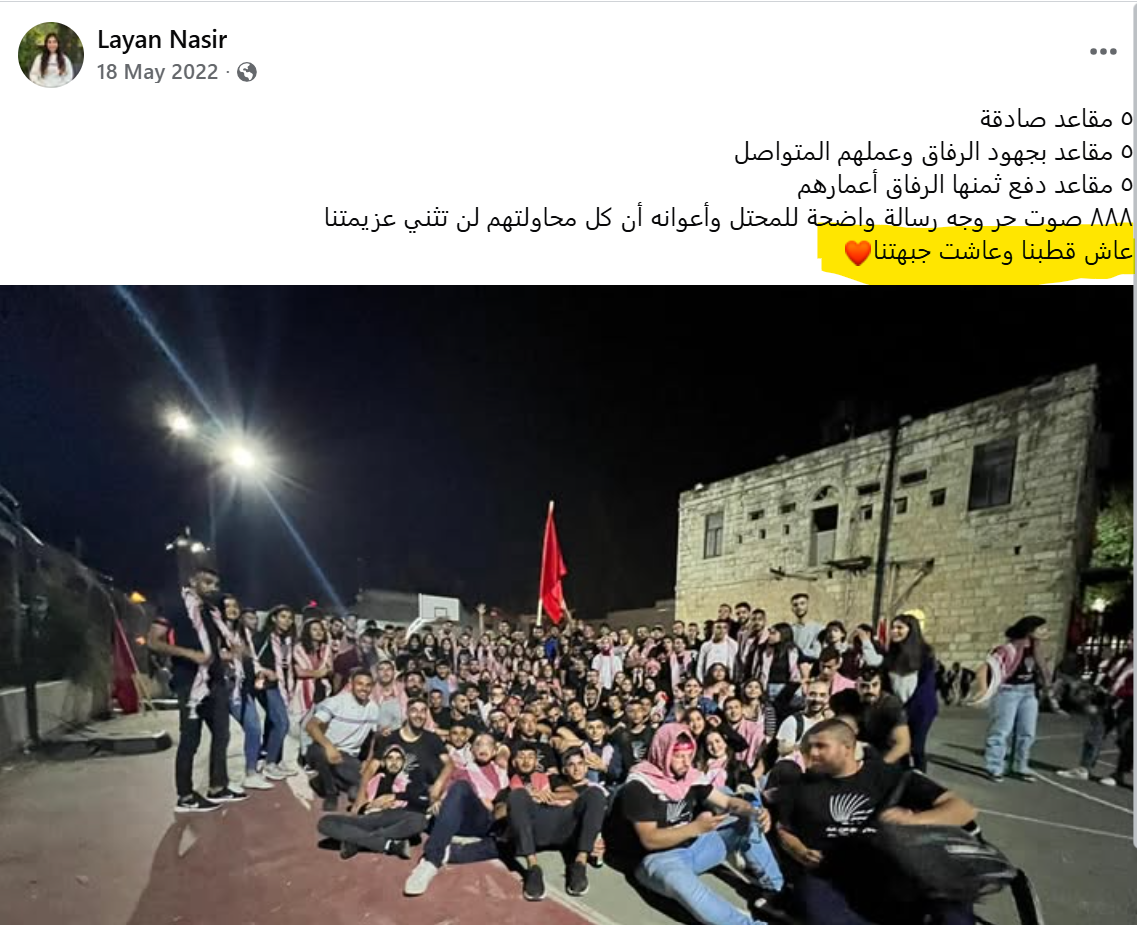
A year later, the same message appears again. There is no ambiguity here. Nasir once more refers to the Pole and the Front as “our” Pole and “our” Front, this time alongside a sea of red flags associated with the movement.
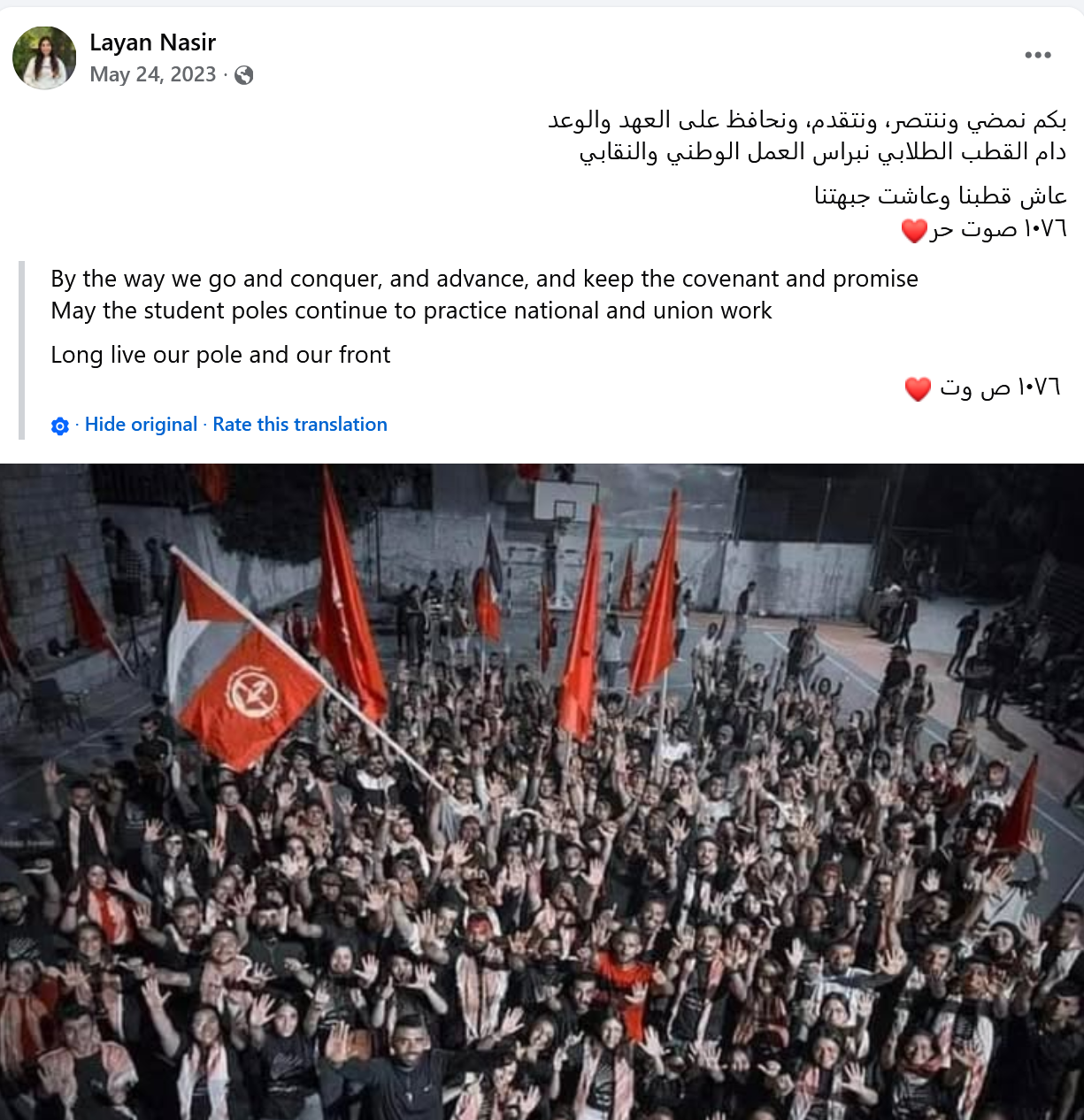
So I was left thinking why on earth the Archbishop would have met a political activist aligned with the PFLP. So I went back over the images from day one to see if I could see anything more in those. It turned out I had missed something.
On her very first day the Archbishop had visited the YMCA in Jerusalem, where she met a 25-year-old woman who is described only as having been a child detainee in Israeli administrative detention. For context there are only six images on the page, and only three of these contain faces, so it is not as if I am selectively picking a single face from a crowd. She is a central figure, and in a short clip uploaded to X, we are shown the Archbishop listening to her giving “powerful testimony” in a speech:
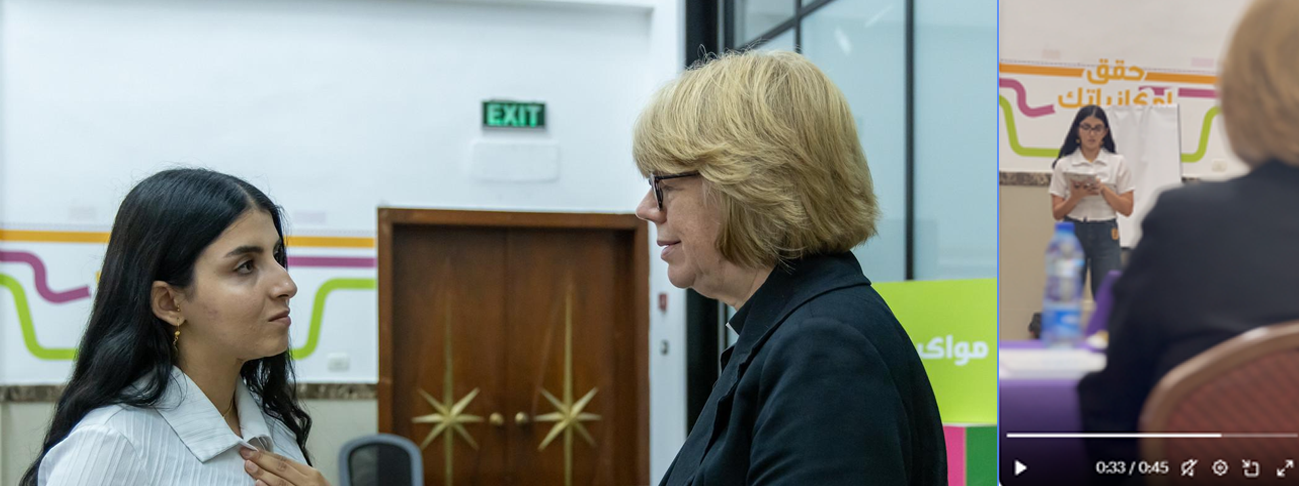
Oddly, despite her appearing in photos, giving a speech, and sitting as one of the select few around the YMCA table, we are not given a name.
Although the Archbishop’s office does not identify her, it appears that the woman is Zeina Barbar.
Zeina’s father is Majd Barbar, a PFLP terrorist who spent 21 years in an Israeli jail for terrorist activity during the Second Intifada. According to al-Jazeera Barbar and four others were charged with forming a terror cell that smuggled a car bomb into Jerusalem and preparing hand grenades:
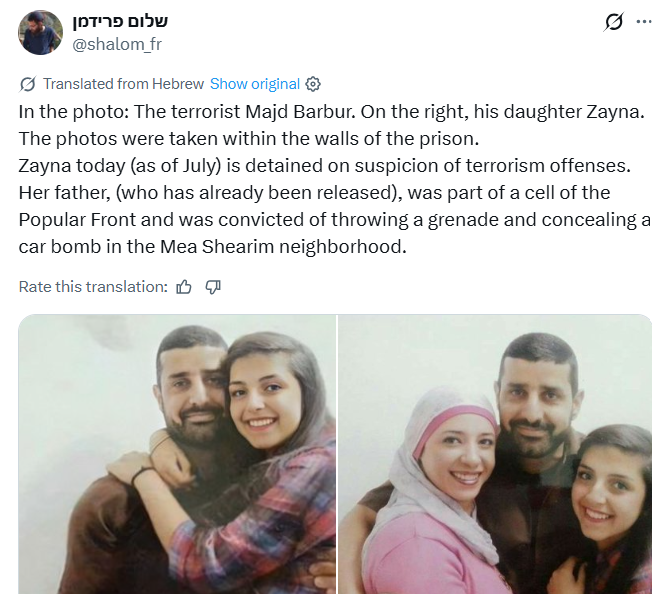
His daughter, Zeina, who apparently gave such “powerful testimony” to the Archbishop, is also a PFLP-affiliated activist:
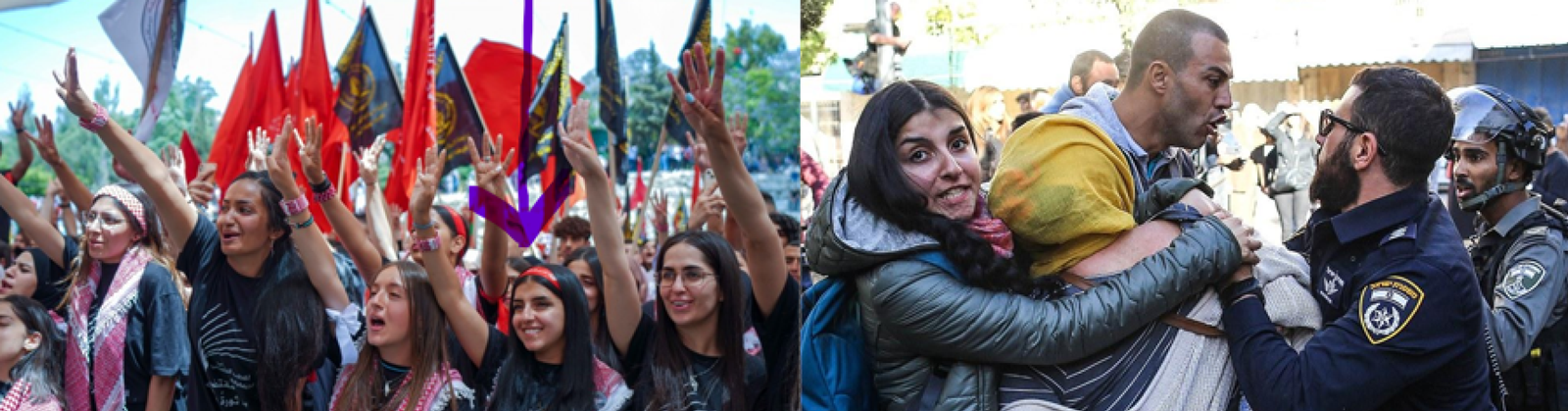
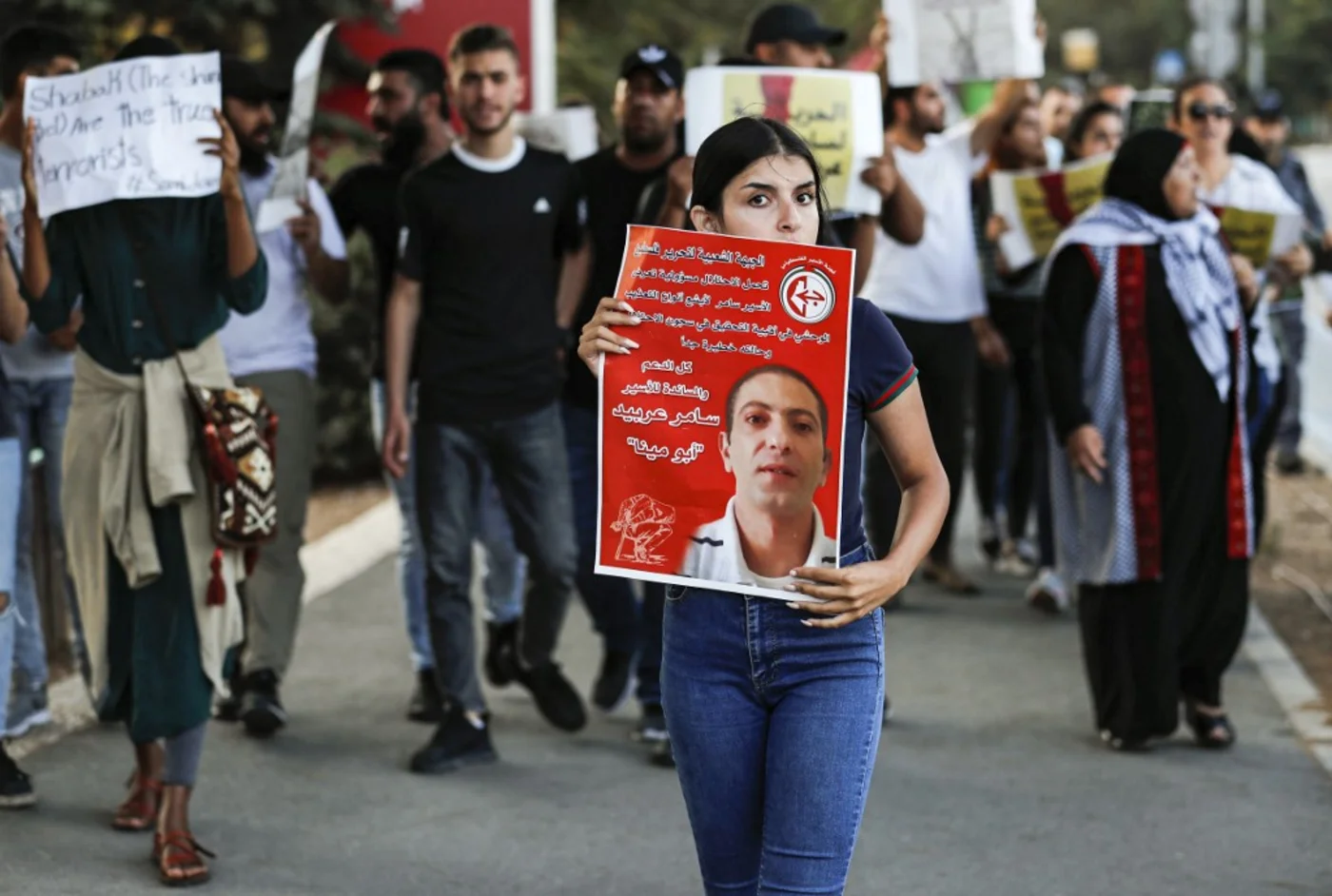
Here she is holding an official PFLP poster in support of Samer Arbid, who commanded a Popular Front for the Liberation of Palestine (PFLP) terror cell that carried out a bombing against Israeli civilians, murdering 17-year-old Rina Shnerb, and injuring her father and brother. According to the Israel Security Agency, Arbid prepared and detonated the explosive device.
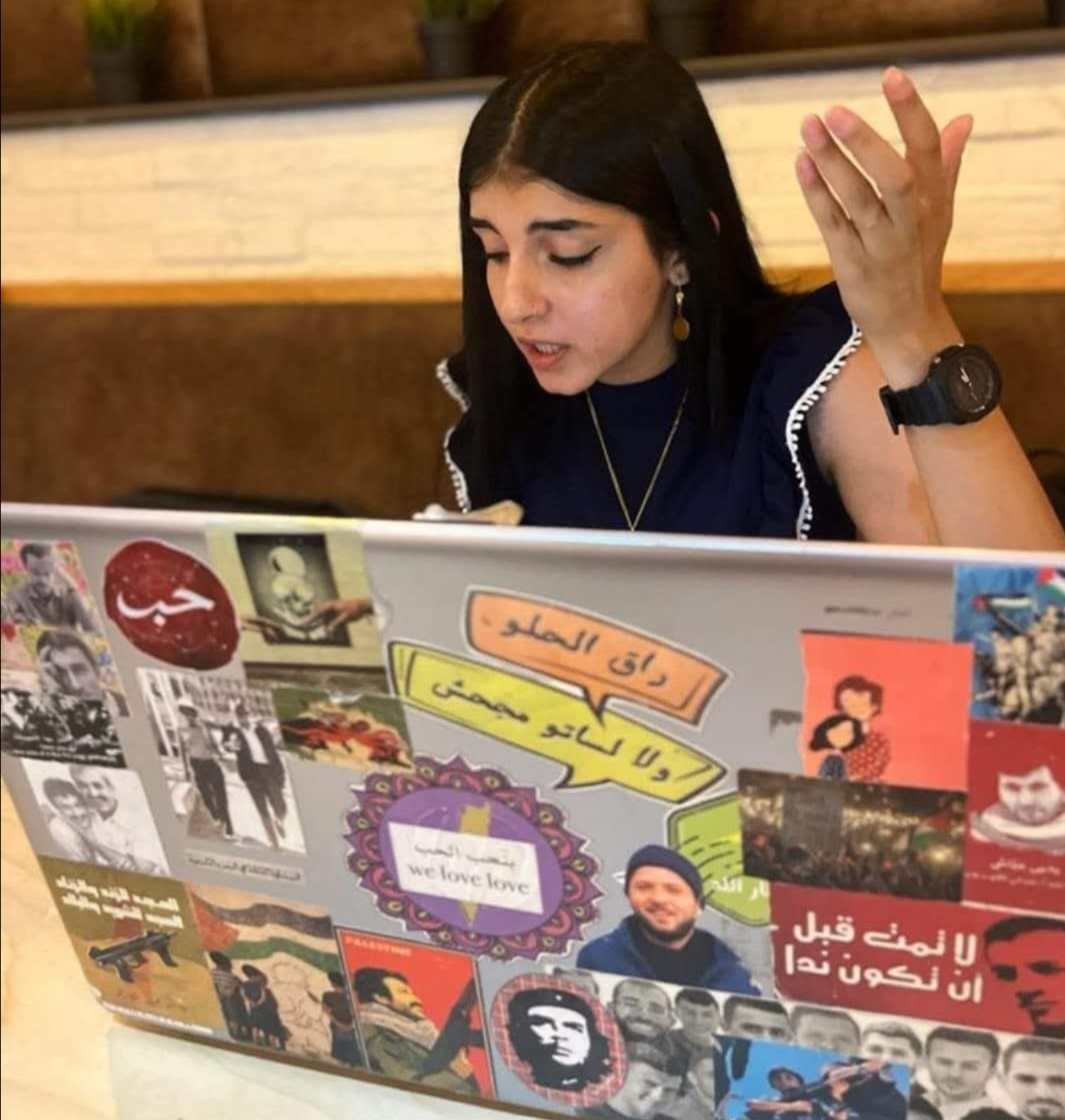
This is her with her laptop – the imagery is clear. This is the laptop of an activist who has no problem with violence:
The logic is simple. An imam cannot go to Nablus and meet with terrorist supporters just because they are Muslim. In similar fashion, the Archbishop cannot meet PFLP-affiliated activists simply because they are born into clans that identify with the Christian faith. What the Archbishop did by meeting these people is an absolute disgrace.
It is hard to believe that the Archbishop of Canterbury actually knew that these two women, whom she was presenting as innocent, both had long histories of association with a terrorist group, but this only reinforces how little understanding her office clearly has of what is actually taking place on the ground. Because both these women are from well-known clans and live within a tiny community. If the Archbishop herself was unaware of their backgrounds, others almost certainly were not. Those people who organised the tour and put the women in the room with the Archbishop must have known exactly who they were.
Historical conflicts with the Druze, Ottoman oppression, rising Pan-Arab nationalism and the 20th-century growth of Islamist power have all contributed to the decline of Christian populations. In the midst of all this, the creation of a Jewish refuge, Israel, created additional and undeniable pressures for those caught on the Arab side of the partition. But Israel has proven to be a place in which Christians can practise freely. No, it is not perfect, and yes, of course, like everywhere else, there is racism – but it is still the one free society providing Christians with security in a region that has become a region of failed or failing states.
So for the Archbishop to align herself with supporters of terrorist factions and point the finger of blame at the one place in the region where the Christian world is thriving is an unforgivable betrayal of every community that seeks to live in peace – including her own. In these difficult times, we would all have hoped that the new Archbishop of Canterbury would stand up for her persecuted Christian brothers and sisters in the Middle East. Instead she sided with those who spread hate and seek to perpetuate conflict. There is no excuse for this.
It should be remembered that on the 19th June, shortly before her trip to the Middle East, the Archbishop visited the Nova exhibition in London, meeting with relatives of those who were murdered in the 7 October attacks. She claimed it was a “privilege to meet with relatives of those who were murdered in the 7 October attacks.”

Just days later she was embracing those aligned with a terrorist group that actually participated in the October 7 atrocities.
I am unsure how she can even look at herself in the mirror.
Help Me Fight Back Against Antisemitism and Misinformation
For over a decade – and for many years before that behind the scenes – I’ve been researching, documenting, and exposing antisemitism, historical revisionism, and the distortion of truth. My work is hard-hitting, fact-based, and unapologetically independent.
I don’t answer to any organisation or political backer. This website – and everything I produce – is entirely community funded. That independence is what allows me to speak freely and without compromise.
If you value this work and want to help me continue, please consider making a donation. Your support genuinely makes this possible.
You can donate via PayPal using the button below:
Alternatively, you can donate via my PayPal.me account or support my work through my Patreon page.
Independent work survives only because people choose to support it. Thank you for standing with me.




I have known or know Christians from Bethlehem from before the first intifada till today how they suffered from threats on their lives and car being burnt because they worked in Jerusalem. Today when asked where all their relatives are they have one word, Chile. I noticed she didn’t meet with anyone like Yoseff Haddad, a Christian from Nazareth who has fought in the Israeli armed services and defends Israel at places like the Oxford Union.
Thank you. No one reports on persecution against Christians. Not surprising to see the archbishop used for propaganda as are all influential visitors to the region.
If she didn’t know, she knows now.
A leader needs to gather the best available information and act as wisely on it as they can. Being a follower of fashionable opinion is not leadership. What Palestinianism seeks to achieve is no mystery and is for example written in the Hamas charter. Showing sympathy for the Nova exhibition and then publicly supporting Palestinianism is not the humanitarianism it pretends to be.
Did she trouble herself for “powerful testimonies” from the former Israeli hostages? Did she bother to watch the video of burned to death families? She’s a disgrace.
A shocking but necessary indictment of the activities of the Archbishop of Canterbury’s visit to Israel and the Palestinian Authority areas . To be seen and heard in association with terrorists indicates how low the moral standing has fallen.
Please note she didn’t go to the YMCA in Jerusalem, she went to the YMCA in East Jerusalem! I didn’t even know there were two YMCAs until l saw her post. No idea what happens in the East Jerusalem YMCA, but the main one in King David Street is a real gathering place for all religions in the city.
Thank you for such a thorough report of the Archbishops visit. I note that she was studiously steered away from Christ Church in the Old city, which is the oldest Anglican Church in Israel, possibly because its focus has been to minister to the Jews for the last 150 years.
I think that Scriptures are clear on female role within the church? To this day i do not comprehend why believe CoE is Holy Spirit lead church?