
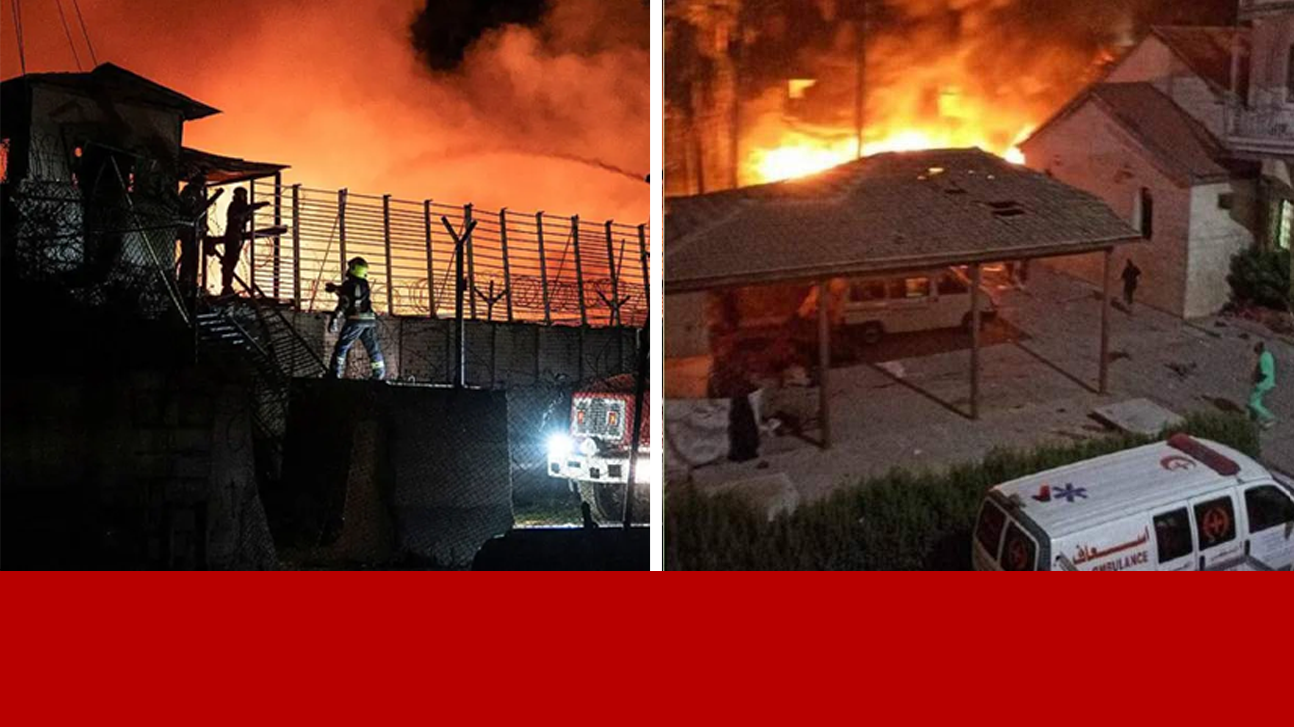
Everyone remembers the story.
On 17 October 2023, reports emerged of an explosion at the Al-Ahli hospital in Gaza. Within minutes, claims of an Israeli airstrike killing hundreds spread around the world. The BBC was central to that coverage, giving the story sustained prominence and leading with it for days.
The truth began to emerge quickly. The explosion was caused by a misfired Islamic Jihad rocket, which landed in a car park rather than the hospital itself. The number of fatalities was significantly lower than first reported. But by then, the original narrative had already taken hold, and several outlets, including the BBC, were reluctant to let it go.
The BBC’s reporting drew widespread criticism and serious allegations of bias. Yet in the absence of a comparable event, its coverage could still be framed as a one-off failure.
That is no longer the case.
On 16 March 2026, an apparent Pakistani airstrike devastated a drug rehabilitation hospital in Kabul. Early reports were strikingly familiar: a hospital hit, claims of hundreds dead, and attribution to an airstrike – swiftly denied by the air force accused.
These similarities created a rare opportunity. A near like-for-like test of how the BBC responds to such events.
The comparison is revealing. And it is deeply troubling.
Exhibit A, The Al-Ahli Explosion
On 17 October 2023, as news of the explosion at the Al-Ahli hospital spread, BBC News rushed to present it as an unfolding “live” story. The initial headline was bold and unequivocal: “hundreds killed in Israeli strike on Gaza hospital”
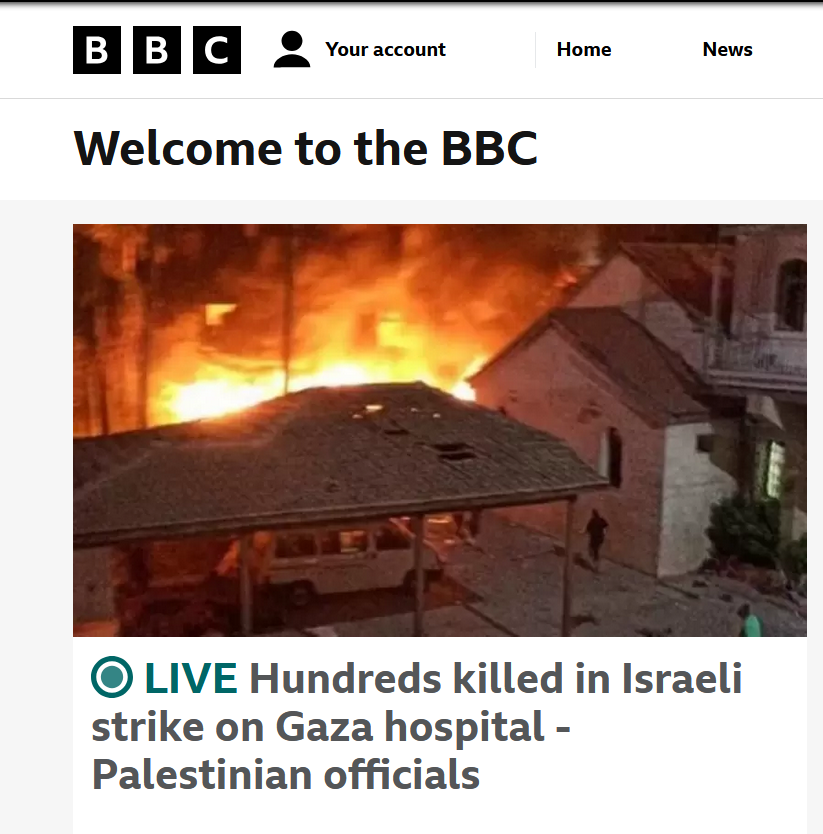
Exhibit B, the Kabul Strike
Now compare that with the explosion at the hospital in Kabul.
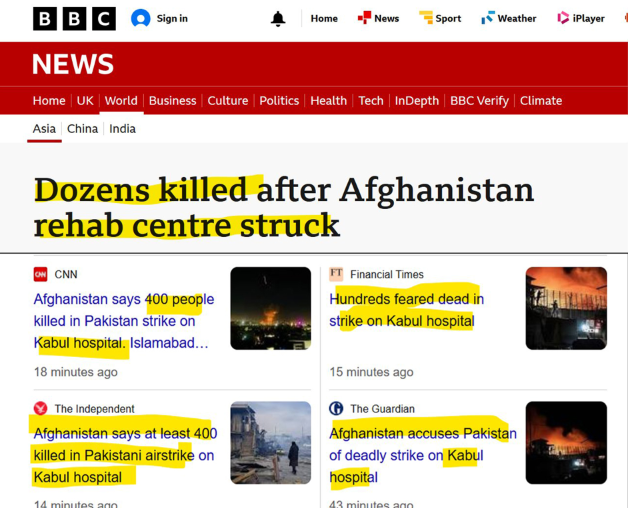
On 16 March 2026, an explosion ripped through a drug rehabilitation hospital in Kabul (sometimes identified as “Amed”). As with Al-Ahli, local officials were initially claiming that hundreds had been killed. Yet the BBC headline reduced this to “dozens killed.” That figure is not clearly attributed within the article, leaving it unclear whether the editorial team were given it or determined it internally.
The headline also fails to identify Pakistan as the state accused of carrying out the strike, and reduces the medical facility to a “rehab centre,” a characterisation that sits uneasily with the BBC’s own reporting. In 2023, BBC journalists visited the same site and described it plainly as a hospital. There was no ambiguity there.
Below the BBC’s headline, I have included contemporaneous reporting from the Financial Times, CNN, The Independent, and The Guardian, to illustrate just how far out of alignment the BBC’s framing was:
Al-Ahli Explosion – Continual and Obsessive Coverage:
Within 24 hours of the 2023 explosion in Gaza, at least five related stories appeared on the front page of the BBC News website:
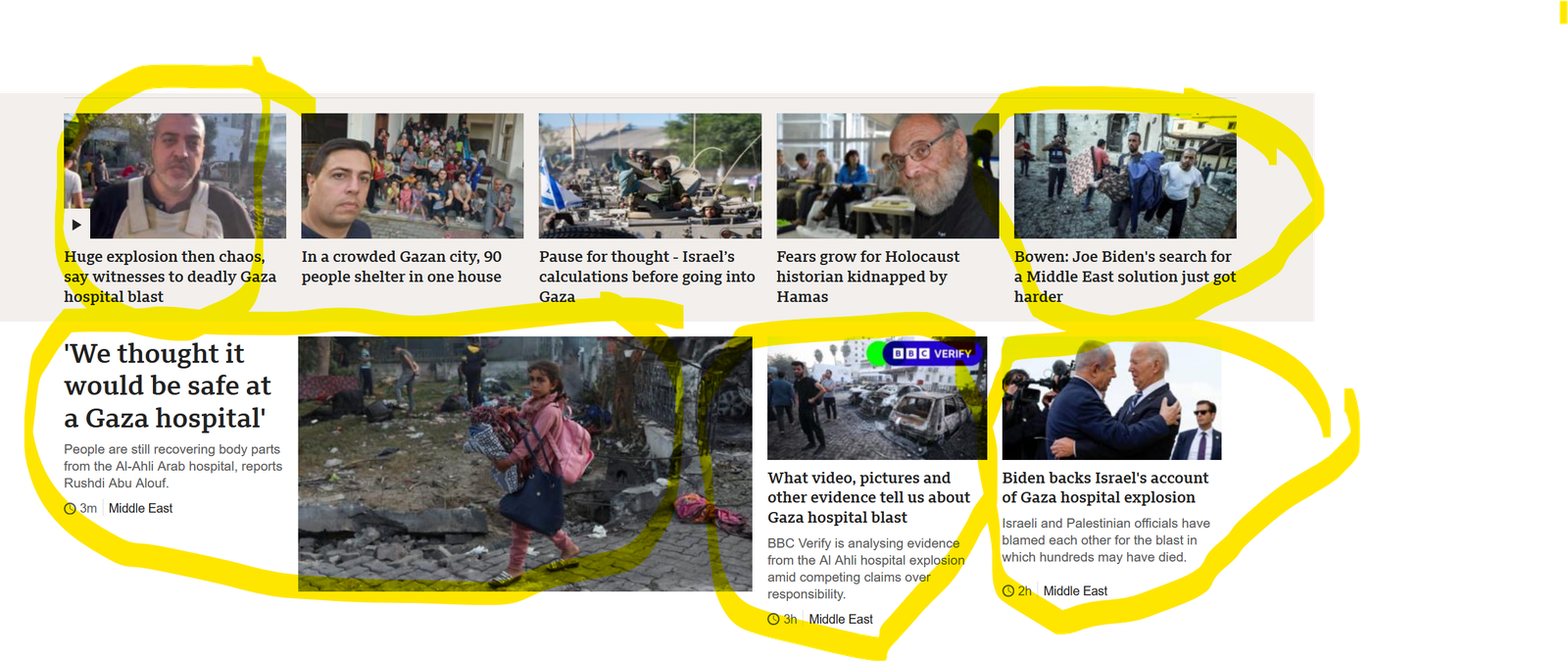
What followed was not routine reporting. The BBC threw everything it had at Israel. It dominated coverage for days. BBC big guns, like Jon Donnison and Jeremy Bowen, were thrown into the mix, and both went well beyond neutral reporting, overstepping the mark, and making claims the BBC would later have to walk back:
Donnison: “It’s hard to see what else this could be, really, given the size of the explosion, other than an Israeli airstrike or several airstrikes.”
Bowen: “The explosion destroyed Al-Ahli Hospital. It was already damaged from a smaller attack at the weekend. The building was flattened.“
Yet reading the October 18 BBC Verify piece, it is clear the team already assembled everything they needed to conclude it was an errant rocket. The BBC had a reporter on the site (so no excuses about not having access), the limited external damage was visible, they had spoken to experts who cast huge doubt on Israeli involvement. Yet still BBC Verify could not let it go. These Verify pieces appeared on the 18th, 19th, 25th and 26th October – meaning that more than a week after the event, the BBC was still amplifying a false narrative on its front page:
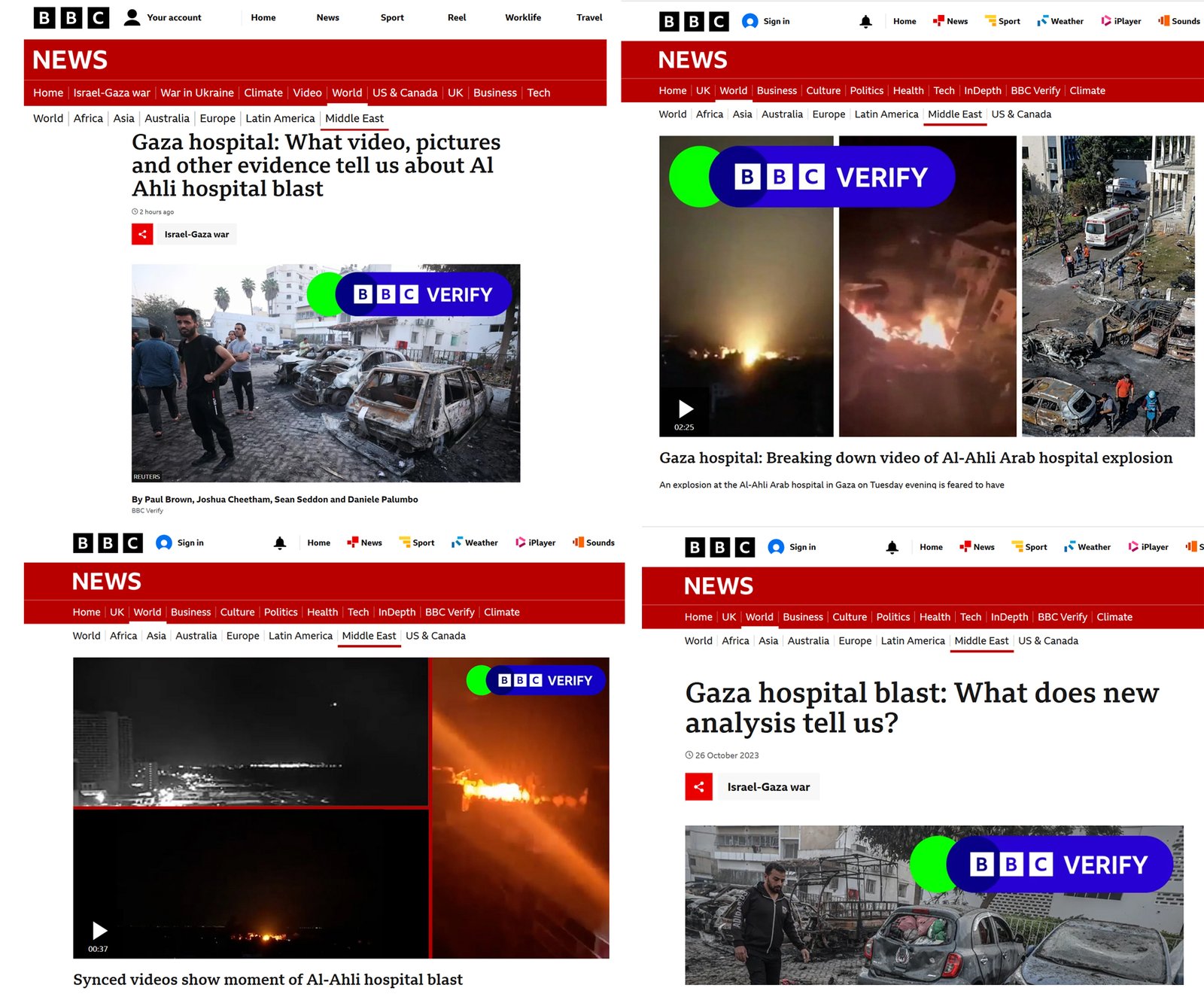
In the last BBC Verify piece, published nine days after the blast, alternative theories were still being explored, relying on anti-Israel activist groups such as Forensic Architecture, to keep Israeli responsibility in play.
BBC Verify leaned into uncertainty:
“It’s unlikely that evidence from the crater alone will help us understand exactly what caused this.”
In isolation, that is a defensible position. In context, it reads differently. At some point, caution stops being careful journalism and becomes resistance – a reluctance to follow the evidence where it leads.
There are fringe theories about almost every major event – including 9/11 – yet credible news organisations do not continue to platform them once the core facts are clear.
The Pakistan Non-Story
Compare the Al-Ahli obsession with the BBC’s near-total lack of interest in a far more devastating case in Kabul.
This was not an ambiguous explosion in a car park. It was reported as an airstrike that caused significant damage to the medical facility.
Yet within eight hours of the initial report, the story had already disappeared from the BBC’s front page:
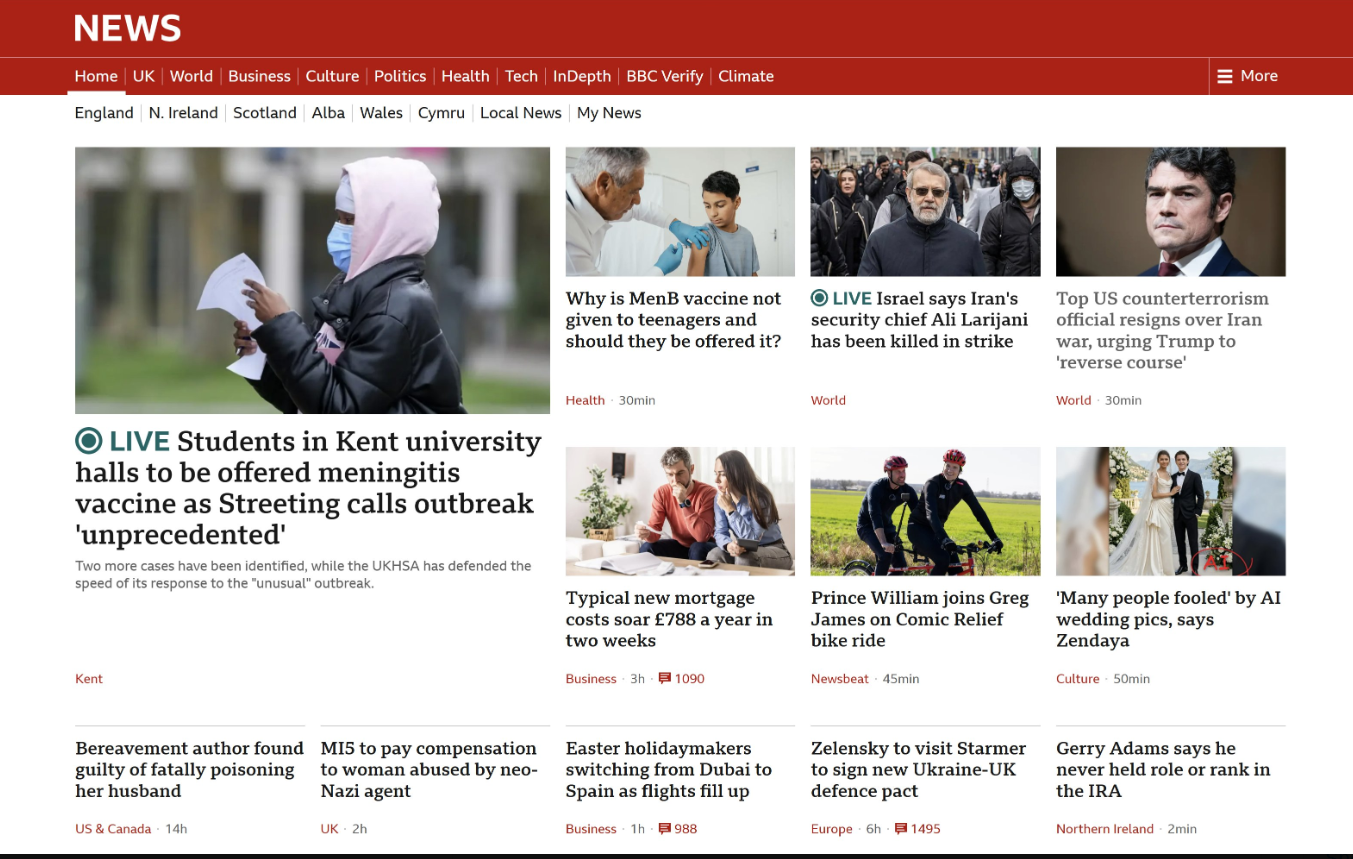
A second “human interest” article on the strike was published a day later, but this did not make the front page.
Worse still, as the confirmed casualty figures rose, BBC interest appeared to fall.
One story dominated headlines for days. The other barely survived the afternoon.
And of course, BBC Verify were nowhere to be seen. This particular contested narrative – a hospital explosion with hundreds reported dead – simply did not get the team out of bed:
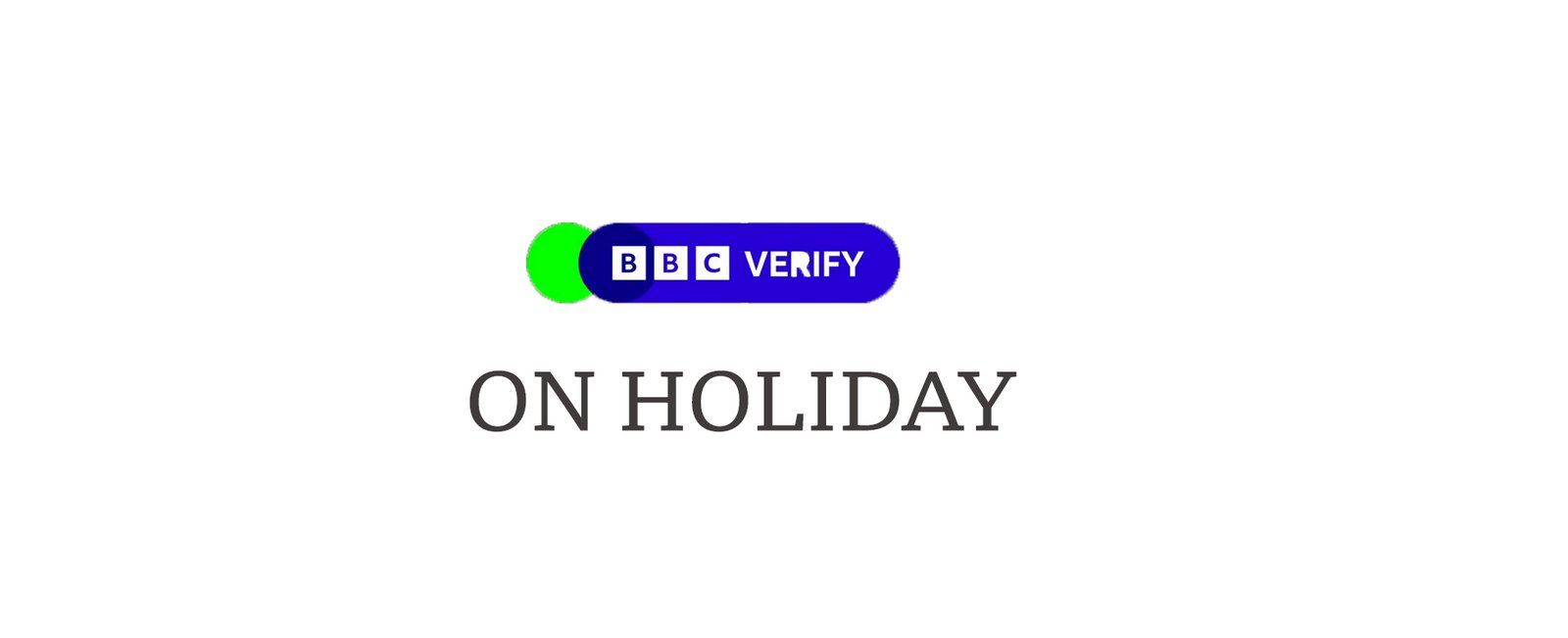
While preparing this piece, the BBC published a further report on the conflict on 21 March – five days after the strike.
The article was not about the strike itself. Instead, it framed events through competing narratives, burying the reported 140+ casualties within a broader “both sides” account that placed more emphasis on unspecified 2025 losses in Pakistan than on a devastating hospital strike in Kabul just days earlier.
The Pakistan Blindspot
But this is not just about a single attack on a hospital.
There is an ongoing conflict between Pakistan and Afghanistan. Yet according to the BBC’s own coverage pages, there were no updates at all on Pakistan and Afghanistan between 27 February and the strike – a silence of more than two weeks:
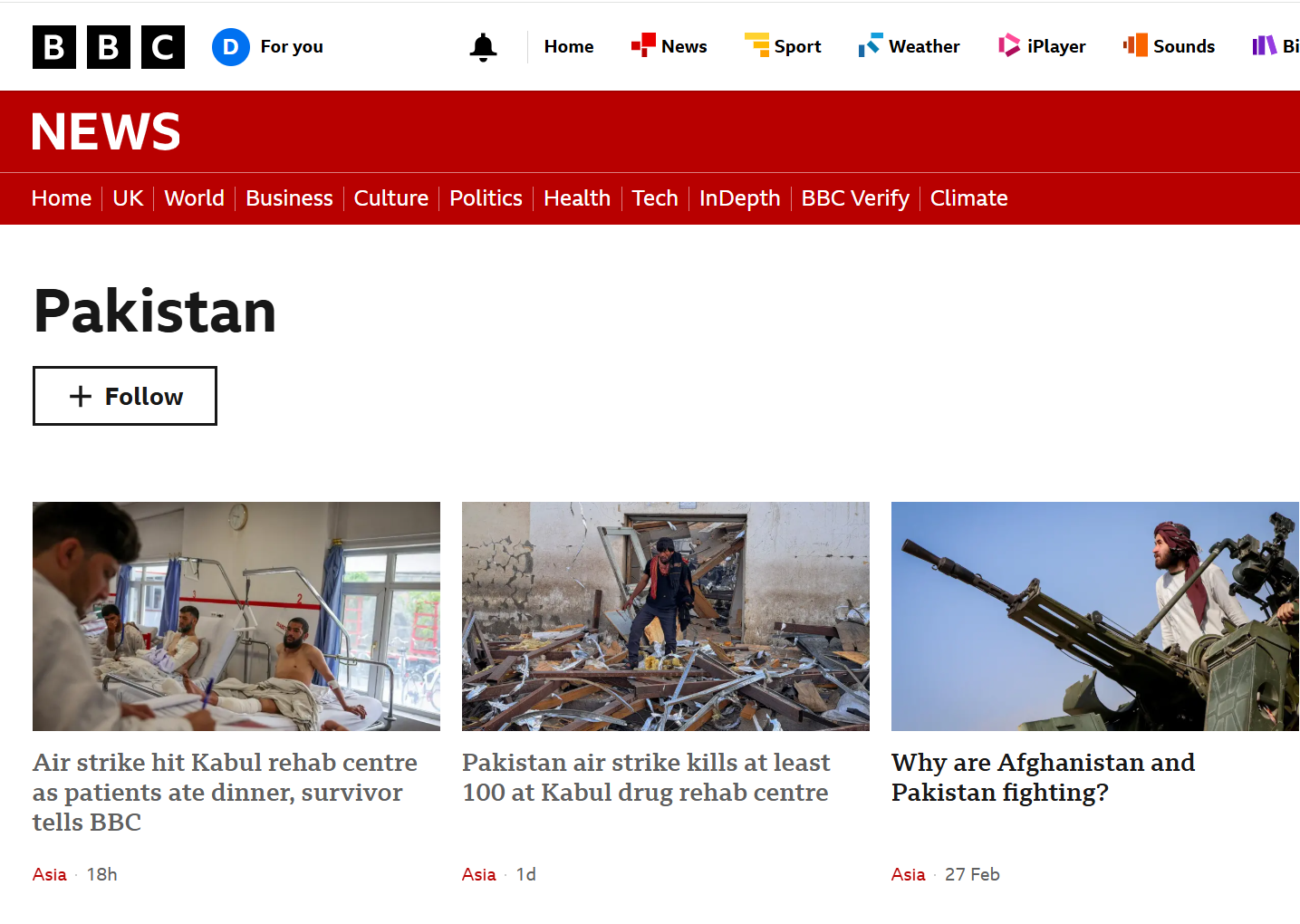
This silence would suggest nothing of note had happened during this period. A brief look at other international reporting shows that this is far from the case:
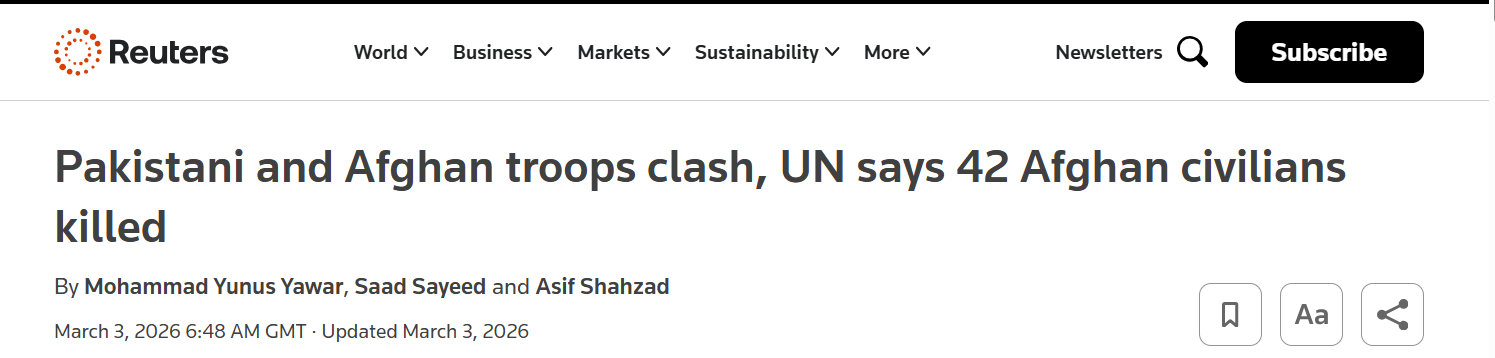
How is it possible that a UN statement reporting 42 civilian deaths did not make it to the pages of the BBC?
Or why is the BBC not reporting that a UN refugee agency said more than 100,000 people had fled their homes in Afghanistan to escape the fighting?
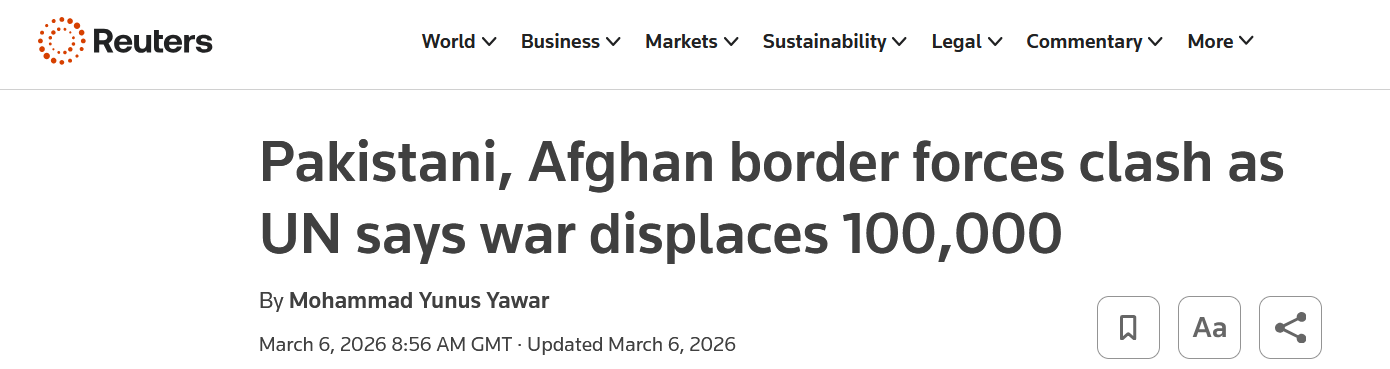
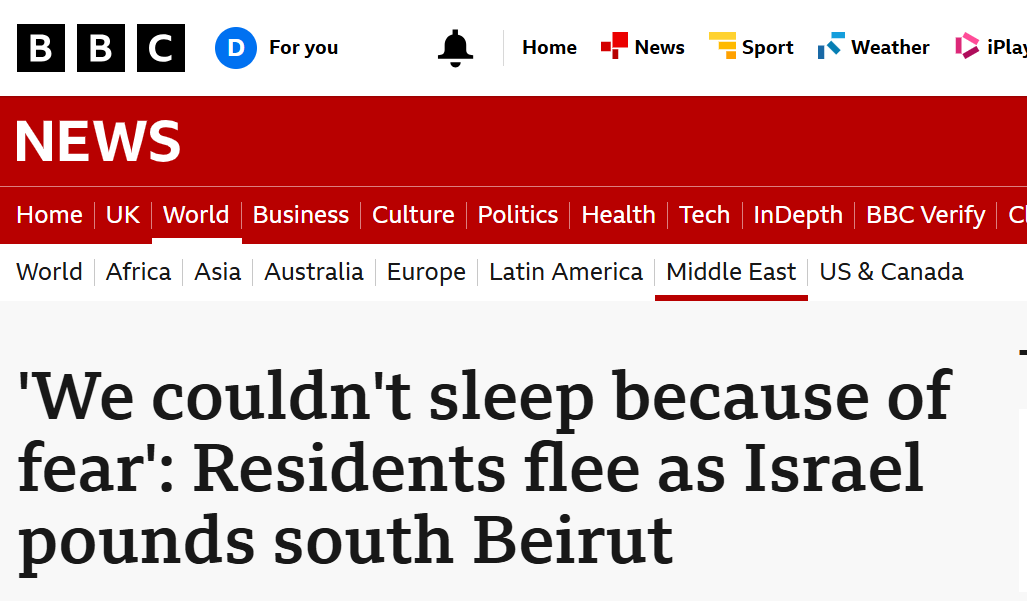
Yet on that same day – 6 March – the BBC was quick to publish reports when the story involved Lebanese civilians allegedly fleeing Israeli attacks.
On 13th March – during the BBC’s window of silence – Pakistani forces attacked fuel depots in Kabul, hitting civilian homes and killing four people, including a woman and a child:
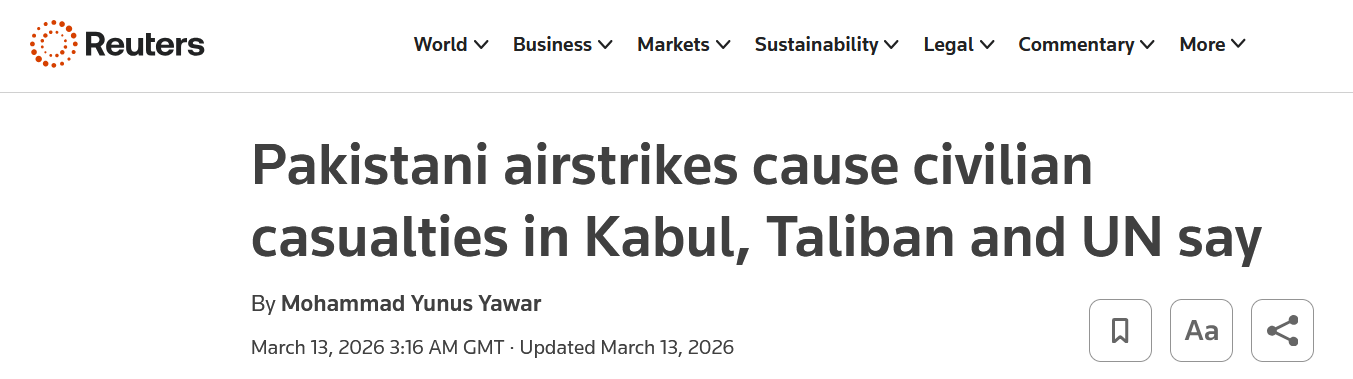
There was no reporting of this on the BBC at all. Yet the BBC had no difficulty devoting resources to a human interest report from Lebanon – visiting a family in a Hezbollah stronghold that had been hit by Israel:
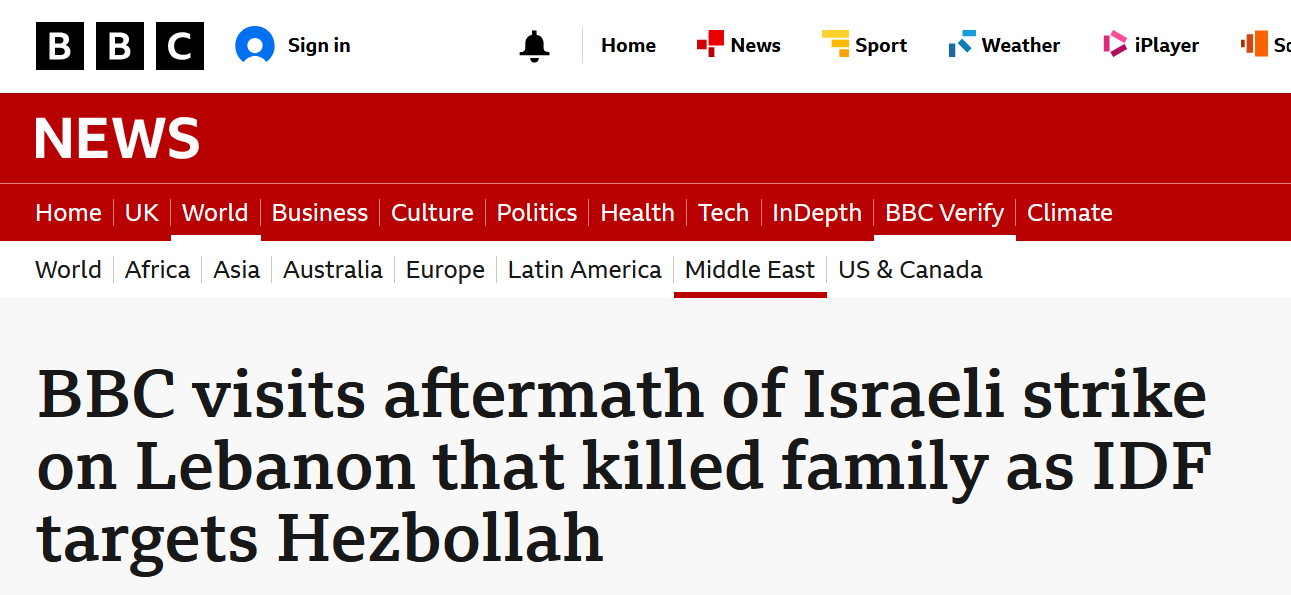
The BBC’s Double Standard – A Pattern Not Errors
I have often argued that the BBC’s supply chain creates a bottom-up problem – where too many problematic journalists on the ground feed directly into the news pipeline. As these reporters are the eyes and ears of BBC News, distortion in output becomes inevitable.
But this example suggests something more serious.
Editorial decisions at BBC headquarters appear to shape coverage in line with an underlying narrative. This is not simply an error forced upon the organisation – it is a pattern that reflects conscious editorial choice.
The consequences are clear.
For whatever reason, the BBC editorial machinery shows a spike in adrenaline when Israel can be cast in a negative light. This fixation results in coverage that holds Israel to a standard no other nation is held to – behaviour that many would recognise as antisemitic under the IHRA definition guidelines.
But that still does not explain the lack of reporting on Pakistan.
The UK is home to millions of people with Pakistani heritage. A lack of relevance cannot be the answer.
So what is?
Newsrooms do not operate in a vacuum. They are shaped by the people within them. Their backgrounds, politics, heritage, sensitivities, and assumptions.
Whether that dynamic plays a role here is an open question.
But it is one that must be asked.
Help Me Fight Back Against Antisemitism and Disinformation
For over a decade – and for many years before that behind the scenes – I’ve been researching, documenting, and exposing antisemitism, historical revisionism, and the distortion of truth. My work is hard-hitting, fact-based, and unapologetically independent.
I don’t answer to any organisation or political backer. This website – and everything I produce – is entirely community funded. That independence is what allows me to speak freely and without compromise.
If you value this work and want to help me continue, please consider making a donation. Your support genuinely makes this possible.
You can donate via PayPal using the button below:
Alternatively, you can donate via my PayPal.me account or support my work through my Patreon page.
Independent work survives only because people choose to support it. Thank you for standing with me.




Topical post David, specifically when set alongside a piece in something called JewishNews today in which a former BBC journo writes that criticism of the Beeb is harsh as news only amounts to 10% of it’s scheduled broadcasting. The author who identifies as Jewish with family in Tel Aviv references Natasha Hausdorff and her use of “the invective” in relation to the bias of the UK National Broadcaster and the unfair demonization of its journos like Jeremy Bowen. The old booby was anxious to point out that we should excuse the odd misdirection because of all the wonderful and much loved costume dramas that they also produce. Seriously, you couldn’t write this stuff. In the comment section I gently suggested that whilst a nip-slip on a weekend episode of Strictly or a forgotten line on Call the Midwife is unlikely to incite radical Islamists to kill Jews, a mendacious report by Bowen on an Israeli strike on a Gaza hospital may have an entirely different outcome as the good people of Crumpsall may confirm. I await a response with minimal optimism.
As usual the forensic David Collier tears the BBC apart
Thank you so much for this.
Thanks for bringing up al-ahli hospital again to prevent this piece of malevolent BBC reporting being forgotten.
The BBC reserves a visceral hatred of Israel, often devolving into anti-Jewish animus, that manifests itself in patently false and/or exaggerated reporting which will forever sully its once glorious reputation.
Your reporting on this irrational behaviour by the BBC will hopefully bear some fruit by keeping it in the public eye
Al-Ahli scandekiys “reporting,” was rge , daring new levels of bloodlibel like which was known to be in the Islamo Arab Middle East for decades. It went downhill from there.